Short answer
A graft is a follicular unit taken from the donor area and placed in the recipient area in a hair transplant, together with its root and the tissue around it. Hair does not grow one strand at a time but in small natural groups of 1 to 4 (rarely 5) hairs; these groups are called follicular units. The unit that is counted and planned in a hair transplant is this unit: the graft.
How many hairs are in one graft depends on the person: some grafts hold one hair, most hold two or three and some hold four. In the literature and in clinical practice an average of roughly 2–2.5 hairs per graft is often used. So a 3,000-graft transplant means roughly 6,000–7,500 hairs, depending on the person's graft structure. How many grafts are needed, and how many the donor area can give, is decided by the physician after examination.
What does "graft" mean? Follicular unit versus graft
In medicine, "graft" means a piece of tissue that is transplanted; in hair transplantation it almost always means a follicular unit. A follicular unit is the group of hair roots that sit together in the skin, with their sebaceous gland and a thin connective tissue sheath. When a graft is harvested, the aim is to remove this unit without splitting it, cutting its roots or letting it dry out.
So the practical answer to what a graft means is: the unit that is counted, carried and implanted in a hair transplant. The hair count is the number of strands inside the grafts; the two are often confused.
Graft types: single, double, triple and quadruple grafts
| Graft type | Hairs | Typical placement | Note |
|---|---|---|---|
| Single graft | 1 hair | Very front of the hairline, temples | For a fine, natural hairline |
| Double graft | 2 hairs | Just behind the hairline | One of the most common types |
| Triple graft | 3 hairs | Mid-scalp | Adds density |
| Quadruple (multiple) graft | 4 or more hairs | Crown and back | Thick look; not used at the front |
Which type goes where is the physician's plan. The team sorts the harvested grafts in a petri dish by hair count and lines them up in the order of implantation; for this step see the graft storage and graft viability guide.
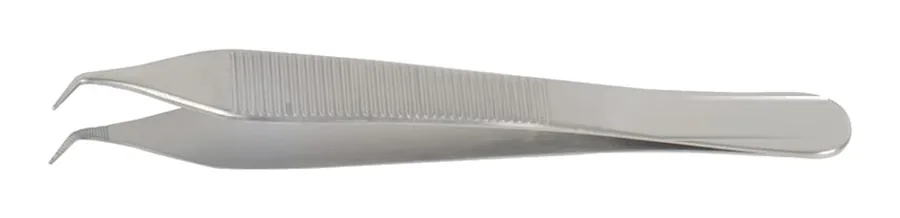
How many hairs per graft? Graft count versus hair count
One of the most common questions in consultations is how many hairs one graft contains. With an average of roughly 2–2.5 hairs per graft, the relationship between graft count and hair count can be summarised as:
| Graft count | Approximate hair count (2–2.5 hairs/graft) |
|---|---|
| 1,000 grafts | 2,000 – 2,500 hairs |
| 2,000 grafts | 4,000 – 5,000 hairs |
| 3,000 grafts | 6,000 – 7,500 hairs |
| 4,000 grafts | 8,000 – 10,000 hairs |
This table is an example of the arithmetic, not a guarantee. In a person with thick hair and many multi-hair units the same graft count means more hairs; with fine hair and many single units it means fewer. Visible density depends not only on the hair count but also on hair thickness, colour, wave and contrast with the skin.
Grafts and hairs
3,000 grafts ≈ 6,000–7,500 hairs
What is the donor area, and how many grafts can be taken?
The donor area is where the grafts are taken from; usually the back and the two sides of the head. Hair roots there are considered more resistant to shedding, which is why this is called the "safe donor area". In some cases beard or body hair is considered as donor hair; that decision belongs to the physician.
How many grafts can be taken from one person depends on:
- the follicular unit density of the donor area (units per cm²),
- the size of the donor area and the thickness of the hair,
- the reserve kept for a possible second procedure in the future,
- the skin and hair structure.
Over-harvesting can leave the back of the head looking thin, so the number of grafts to take is planned by the physician after examination and dermoscopic assessment.
Graft estimate: how many grafts are needed?
A graft estimate rests on two values: the size of the area to be covered and the density planned for it.
Grafts needed ≈ recipient area (cm²) × planned density (grafts/cm²)
Example: for a front area of about 80 cm² with a planned density of 40 grafts per cm², 80 × 40 = 3,200 grafts. If 30 grafts/cm² is planned for the same area, 2,400 grafts are enough. The density to plan is set by the physician according to donor capacity, hair structure, the person's age and the likely progression of hair loss. Statements online such as "3,000 grafts cover this much area" therefore give only a rough idea.
The graft's journey: from extraction to implantation
The time a graft spends outside the body, and its temperature and moisture, are critical for graft viability. In clinics the workflow usually runs like this:
| Step | What happens | Supplies used |
|---|---|---|
| 1. Extraction (FUE) | The punch frees the graft from the surrounding tissue | FUE punch, micromotor and handpiece |
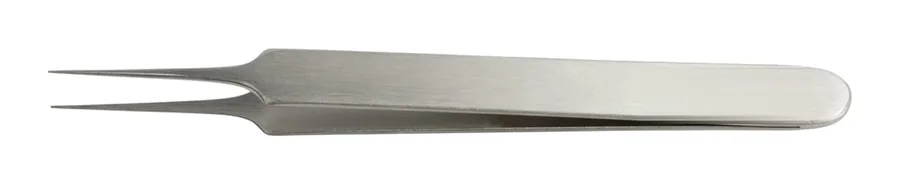
| 2. Collection | The freed graft is gently lifted out | Extraction forceps |
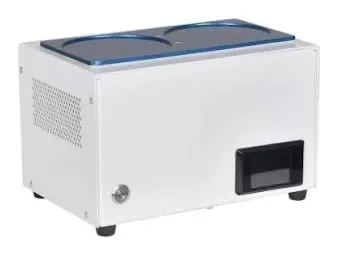
| 3. Holding | Grafts wait in solution in a cool setting | Glass petri dish, graft cooling unit |
| 4. Sorting and counting | Grafts are sorted by hair count and counted | Sorting forceps |
| 5. Channel opening | Channels are opened in the recipient area | Sapphire blade, Blade Handle |
| 6. Implantation | The graft is placed in the channel | Implantation forceps or a DHI pen |
In FUE the punch diameter is usually chosen between 0.65 and 0.90 mm; smaller diameters for single and double units, larger ones for multi-hair units. For choosing a punch see the FUE punch buying guide, and for forceps the hair transplant forceps types article.
The graft's journey
Extraction · holding · sorting · implantation
Main factors in graft viability
- Time outside the body: the longer the time between extraction and implantation, the higher the risk for graft viability; teams match the pace of extraction and implantation.
- Drying out: drying is one of the most common causes of graft loss; grafts are kept moist in solution.
- Temperature: holding is usually done in a cool setting; cooling units keep this arrangement steady on the sorting table.
- Mechanical trauma: a graft should be held by its surrounding tissue, not by the root, and must not be crushed or bent; that is why fine-tipped forceps are used.
- Correct sorting: separating single, double and multi-hair grafts correctly matters for a natural-looking hairline.
Detailed information on storage solutions and the cold chain is in the graft storage and graft viability guide. For the full supply list of the procedure see hair transplant supplies and the patient box.
FUE, DHI and the graft: does the method change the graft count?
The graft is the same unit whatever the method: the follicular unit. The methods differ in how the graft is placed:
| FUE (sapphire or slit channels) | DHI | |
|---|---|---|
| Extraction | One by one with a punch | One by one with a punch |
| Channel | Channels are opened first, then implanted | Channel and implantation at once, with the pen |
| Implantation tool | Implantation forceps | DHI implanter pen and needle |
| Graft count | Planned with the same formula | Planned with the same formula |
Which method is chosen and how many grafts are planned depends on the physician's assessment. For DHI pens see the DHI implanter pen guide.
Graft-tracking checklist for clinics
- The planned graft count and distribution were recorded in writing before the procedure.
- Punch diameters and spares are ready; the micromotor and handpiece were checked.
- Extraction, sorting and implantation forceps are sterilised, with spares.
- Petri dishes, storage solution and the cooling unit are ready and working.
- Grafts are sorted and counted by hair count; the count is recorded at intervals.
- The pace of extraction and implantation keeps the time grafts spend outside the body short.
- At the end, the number of grafts harvested and implanted, with the type distribution, was entered in the patient file.
Hair transplant supply quotations from Demir Med
Demir Med supplies hair transplant centres by quotation with the materials used from extraction to implantation: FUE punches, hair transplant forceps, the graft cooling unit, the glass petri dish, sapphire blades and DHI pens are in the Hair Transplant Supplies category. Send your list through the quote request page; a written quotation follows within 1 business day.