Short answer
A stretcher or examination couch is the piece of medical furniture a patient sits or lies on for examination, treatment, a procedure or transport. The types clinics meet most often fall into five groups: the fixed examination couch (examination table), the foot-pumped hydraulic couch, the motorised couch adjusted by electric motors, the gynaecological table with leg supports and the wheeled patient transfer stretcher.
Four questions decide the right choice: how long the patient stays on the couch, which positions are needed, whether the physician works standing or seated, and how large the room is. A fixed examination couch is enough for short examinations; for procedures that last hours, such as hair transplants, aesthetic and dermatology work, an electric couch whose height, backrest and leg section are motor-adjusted is preferred. The Demir Med catalogue lists the 3-motor VIP couch, the 4-motor VIP couch with Trendelenburg adjustment and the fitted couch cover that gives every patient a fresh surface; all are sold by quotation.
What is a stretcher? How it differs from an examination table
In everyday Turkish, "sedye" covers both the wheeled or folding devices used to move patients and the couch in the examination room. Clinics have two separate needs:
- Examination and procedure couch: It stays in the room; the patient sits or lies on it and the physician examines or treats on this surface. The names examination table and patient examination table are often used for the same product.
- Transfer stretcher: Designed to move a patient from one place to another, with wheels, brakes and side rails. Used in emergency departments, operating theatres and between wards.
The difference between an examination table and a couch mostly comes from the build: a classic examination table has a fixed height, a metal or wooden frame and a backrest raised by hand. "Couch" covers a wider family; electric models whose height and sections adjust can take the shape of a chair, which is why they are also called medical chairs or hair transplant chairs.
Types of stretchers and couches
The main patient couch types used in clinics and where they are used:
| Type | Adjustment | Typical setting | When to choose it |
|---|---|---|---|
| Fixed examination couch (examination table) | Fixed height, backrest by hand | Outpatient clinics, family practice, private practice | Short examinations, limited budget and space |
| Hydraulic couch | Height by foot pump, backrest by hand | Examination rooms, physiotherapy, beauty centres | Height adjustment without electricity |
| Electric (motorised) couch | Height and sections by motor, with a remote | Hair transplant, aesthetics, dermatology, dental and minor surgery | Long procedures and frequent changes of position |
| Gynaecological table | Leg supports, backrest and seat adjustment | Obstetrics and gynaecology | Gynaecological examination and minor procedures |
| Patient transfer stretcher | Wheels, brakes, side rails | Emergency department, operating theatre, wards | Moving the patient |
| Folding and scoop stretcher | Portable, folding | Ambulance, scene of an incident | Pre-hospital emergency care |
This guide focuses on couches used in examination and procedure rooms. The Demir Med catalogue carries electric procedure couches from this group; transfer and ambulance stretchers are not in the catalogue.
Motorised couches: what the number of motors means
A motorised couch or electric couch is adjusted with a hand remote (a foot control on some models). Each motor drives one movement; the more motors, the more positions the couch can take.
| Motors | Movements adjusted | Suited to |
|---|---|---|
| 1 motor | Height | Examination rooms where height adjustment is enough |
| 2 motors | Height and backrest | Examinations that move between seated and lying positions |
| 3 motors | Height, backrest and leg section | Long procedures such as hair transplants, aesthetic and dermatology work |
| 4 motors | Height, backrest, leg section and Trendelenburg (tilt) | Procedures where the patient is brought to different tilts without getting off the couch |
On some models a fifth motor drives the seat section or a rotation of the couch. The number of motors alone is not a measure of quality; what matters is that the couch covers the positions the clinic's procedures need.
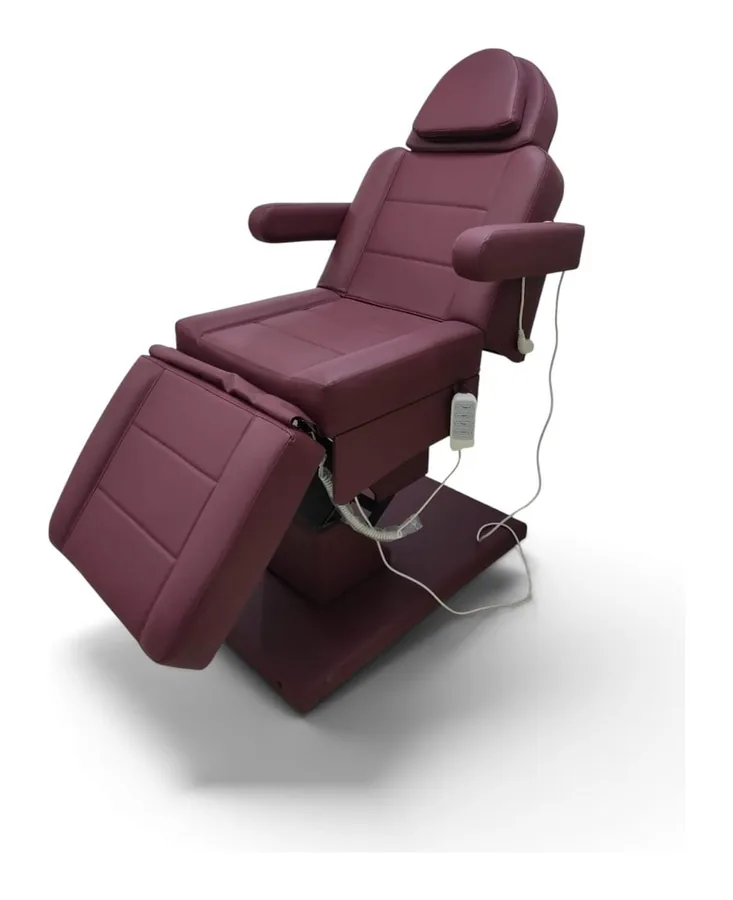
The catalogue's 3-motor VIP couch adjusts height, backrest angle and leg section with three separate motors, independently of each other. The 4-motor VIP couch adds a change of the surface's head-to-foot tilt (Trendelenburg adjustment) to these three movements. Both run on mains power and are operated with a remote; the remote type, dimensions, load capacity, upholstery colour and material are stated in writing in the quotation.
3-motor or 4-motor couch?
The choice follows the clinic's procedures and the positions they need.
| 3-motor couch | 4-motor couch | |
|---|---|---|
| Height adjustment | Yes | Yes |
| Backrest | Yes | Yes |
| Leg section | Yes | Yes |
| Trendelenburg / reverse Trendelenburg tilt | No | Yes |
| Positions | Seated, semi-seated, lying on the back | These plus lying tilted head-down or head-up |
| Suited to | Hair transplants, mesotherapy, PRP, dermatology, aesthetic treatments | The same work, plus procedures where the patient's position is changed by tilting during the procedure |
For an examination and procedure room that does not need tilt, a 3-motor couch is enough. If the physician wants to change the patient's position by tilting during the procedure without the patient getting off the couch, a 4-motor couch is chosen. Which position is used for which procedure is the physician's decision.
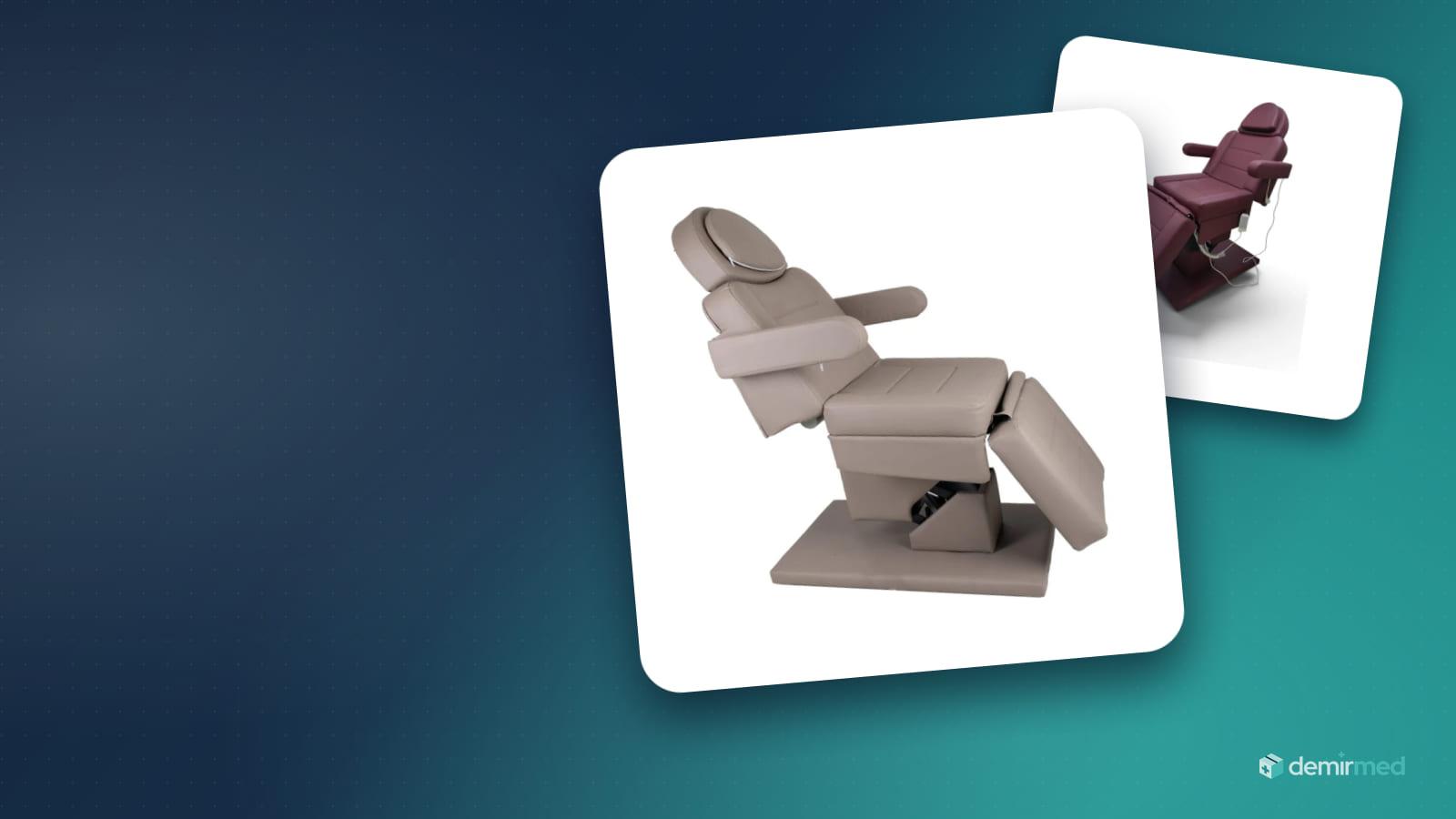
Number of motors
3 motors · 4 motors
What is the Trendelenburg position?
The Trendelenburg position tilts the couch surface, with the patient lying on their back, so that the head end is lower and the foot end higher. It is named after the German surgeon Friedrich Trendelenburg, who used the position in surgery in the 19th century. In the opposite, reverse Trendelenburg position the head end is up and the foot end down.
| Position | Surface | Examples of use given in the literature |
|---|---|---|
| Trendelenburg | Head down, feet up | Exposure in lower abdominal and pelvic surgery, placing catheters in the neck veins |
| Reverse Trendelenburg | Head up, feet down | Upper abdominal, head and neck procedures |
| Flat supine | Surface level | Examination, dressing changes, many minor procedures |
To take these positions the body of the couch has to tilt as a whole; raising the backrest and leg section separately does not give the same result. On 4-motor couches the fourth motor provides this movement. The tilt range varies by model and is stated in the quotation. The physician decides in which patient, at what angle and for how long the position is used.
Choosing a couch for hair transplant and aesthetic clinics
In hair transplant, aesthetic and dermatology clinics the couch is in use for most of the day and procedures can last hours. So these points come first:
- Range of positions: During a hair transplant the patient takes different positions while grafts are harvested from the donor area and during channel opening and implantation. If the prone position is used, ask at quotation stage whether the couch has a face cushion or face opening.
- Working height: The physician and assistant work at the same height for a long time. Motorised height adjustment brings the couch to a team working standing or seated on a stool; the lowest position makes it easier for the patient to sit down and get up.
- Armrests and headrest: They affect patient comfort in long procedures; removable or adjustable ones make it easier to reach the treatment area.
- Upholstery: Choose a wipeable surface with few seams that can be cleaned with disinfectant. Colour and material options are stated in the quotation.
- Remote: The remote should sit within the assistant's reach and its cable should not lie underfoot.
For the other devices of the hair transplant room (micromotor, surgical lamp, graft cooling unit) see hair transplant devices and clinic equipment, and for the room's consumables see operating room supplies. A floor-standing LED lamp and a stainless instrument tray usually stand next to the couch.
Couch dimensions and room planning
Couch dimensions vary by model; most fixed examination couches are about 180–200 cm long and 60–80 cm wide. For electric couches that can take a chair shape, ask separately for the length when lying flat, the depth when seated and the lowest and highest working heights. The dimensions and load capacity of the couches at Demir Med are stated in the quotation.
Points for the room plan:
- Working space: Leave room on both sides of the couch for the physician and assistant to move freely; in hair transplants the team usually works on more than one side.
- Lying position: Allow for the couch getting longer when the backrest and leg section are lowered; it must not hit a wall or cabinet.
- Power: An electric couch runs on mains power; an earthed socket should be close to the couch and extension leads should not be strung loosely across the floor.
- Delivery route: Measure the building entrance, lift and door widths before delivery; large couches are moved in parts or packed.
- Lamp and tray: Position the lamp base and instrument tray so they do not hit the couch while it is being adjusted.
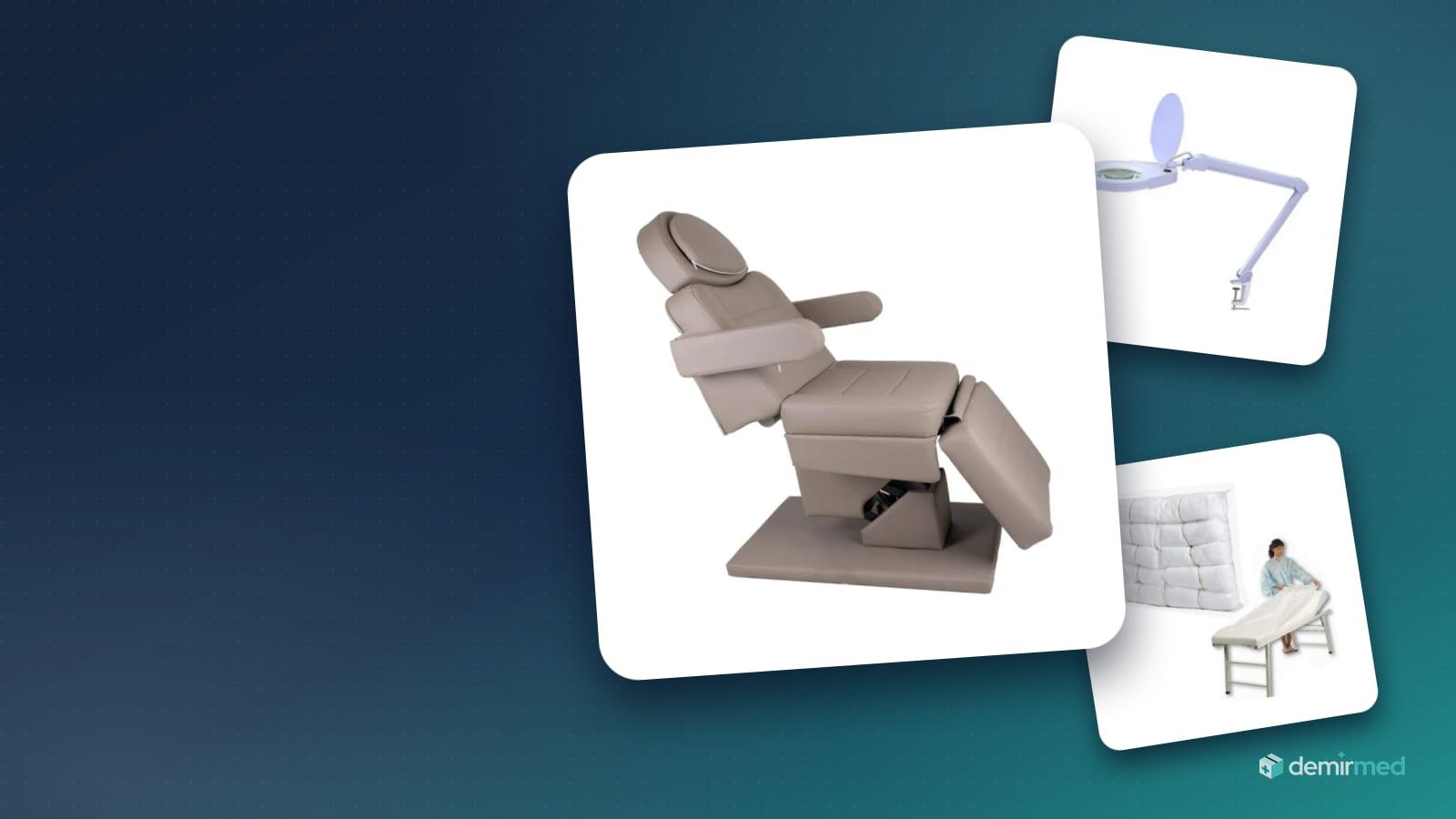
Room plan
Couch, lamp and working space
Couch covers: fitted cover, paper roll and sterile drape
A couch cover is a single-use cover that keeps the couch surface clean for every patient. Three types are common:
| Cover type | Build | Use |
|---|---|---|
| Fitted couch cover | Elasticated edge, non-woven, fits over the cushion like a fitted sheet | Examination and procedure couches; stays in place and is changed quickly between patients |
| Paper roll | Perforated paper roll laid over the couch | Short examinations; torn off for every patient |
| Sterile surgical drape | In a sterile pack, waterproof | Procedures that need a sterile field; as table and patient drapes |
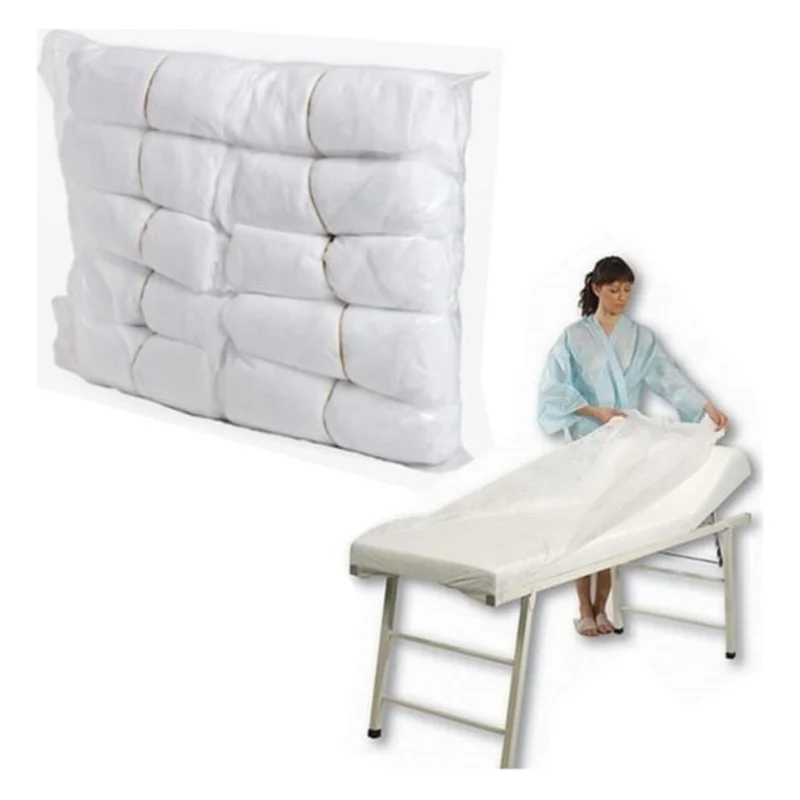
The catalogue's couch cover is single-use and non-sterile, with an elasticated edge all round; it fits over couch and examination table cushions and is sold in packs of 10. For procedures that need a sterile field, the sterile 2-piece drape set (one table drape and one patient drape, waterproof) is used. The number of fitted couch covers needed is easy to work out: monthly patients × covers per patient, plus a 10% margin, rounded up to the pack of 10. For example, 120 patients a month with one cover each need 132 covers, or 14 packs.
Patient gowns, underpads, covers and other textiles are all in the patient care textiles category; for regular use, a per-case quotation is available from the patient care textiles wholesale page.
Cleaning, care and safe use
- Between patients: Change the single-use cover; wipe the upholstery, armrests and headrest with a surface disinfectant the manufacturer approves for the upholstery.
- Upholstery check: A tear, crack or open seam lets fluid seep into the upholstery; damaged upholstery is repaired or replaced.
- Motors: Electric couch motors are designed for intermittent, not continuous, use; follow the working–rest times in the user manual.
- Cable and remote: Check that the remote cable is not crushed or caught in the moving parts of the couch.
- Load and movement: Do not load the couch beyond its capacity; while it moves, make sure nobody's hands or feet are under or around it.
- Records: Keep the couch's serial number, installation date and service records in the clinic's equipment list.
Couch purchasing checklist
- Type and length of procedures: short examinations or procedures lasting hours?
- Positions needed: seated, semi-seated, supine, prone, Trendelenburg
- Number of motors and type of control (hand remote or foot control)
- Lowest and highest working height
- Length and width when lying flat; fit in the room and delivery route
- Load capacity
- Upholstery material, colour and compatibility with cleaning
- Accessories such as armrests, headrest and face opening
- Installation conditions, user manual and warranty information
- CE and UTS documents: shared once verified
- Consumables: fitted couch covers and, if needed, a sterile drape set
Couch and couch cover quotations from Demir Med
Demir Med sells to clinics and healthcare facilities by quotation. The 3-motor VIP couch and the 4-motor VIP couch can be added to a quotation as single units and the couch cover in packs of 10; all of them are in the Medical Equipment and Furniture category. Send the couch, the covers and the clinic's other needs on one list through the quote request page; a written quotation follows within 1 business day. Installation conditions are given in the quotation and the serial number on the delivery document.