Short answer
The supplies used in a hair transplant fall into two groups. The first is the instruments and devices a clinic buys once and reuses after cleaning and sterilisation: the micromotor and handpiece, the implanter pen body, forceps and the blade handle. The second is the single-use consumables opened for each patient: syringes, gloves, drapes, patient textiles, dressings and tests. The patient-specific part of the consumables is packed in one box, called the hair transplant patient box. One operation means one box.
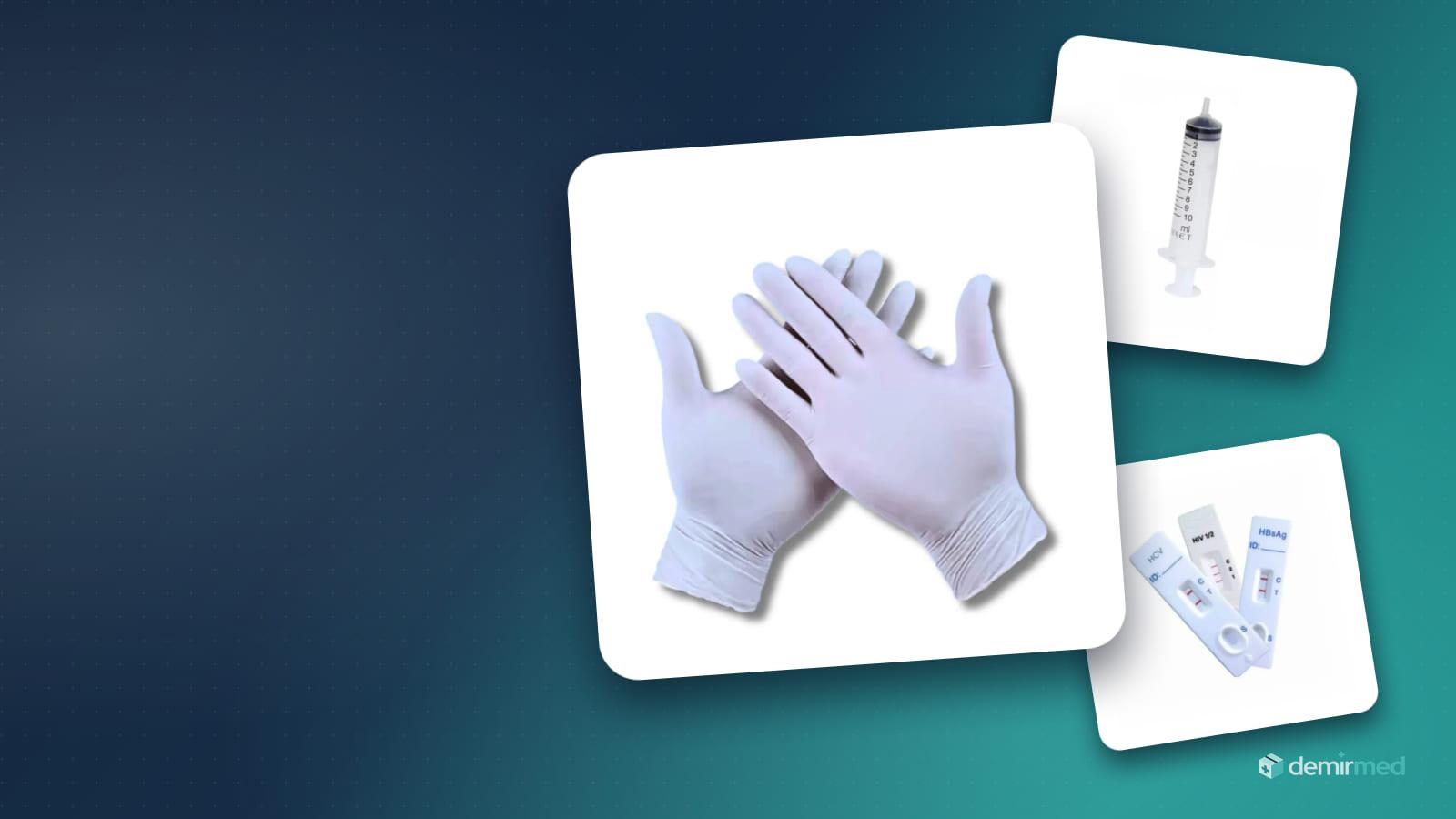
Demir Med's standard patient box contains syringes and needles, sterile and non-sterile gloves, a sterile table drape, a stretcher cover and underpads, a patient gown, caps, masks and slippers, a razor, swabs and bandage, an IV set and HBsAg, HCV and HIV rapid tests. Technique-dependent tips such as FUE punches, sapphire blades and DHI needles are added to the box separately. You can take the box as it is, or build your own on the quotation page by adding and removing items.
How is a hair transplant done? The supplies used at each stage
A hair transplant moves hair follicles (grafts) from the back and sides of the head (the donor area) to a thinning or bald area. The physician and team perform it; the physician decides the technique, the number of grafts and whether the patient is suitable. The table below shows the general flow of the operation day and the supplies on the table at each stage.
| Stage | What happens? | Supplies used |
|---|---|---|
| 1. Preparation | The patient is gowned, tests are run, the room and stretcher are prepared | Rapid tests, patient gown, cap, slippers, stretcher cover, underpad |
| 2. Shaving and marking | The donor area is trimmed and the recipient area is drawn | Disposable razor, shaving gown, marker pen |
| 3. Local anaesthesia | The physician numbs the area | 2–2.5 cc, 5 cc and 10 cc syringes, insulin pen needles |
| 4. Graft extraction | Follicles are removed one by one | Micromotor and handpiece, FUE punch, extraction forceps |
| 5. Graft holding | Grafts are kept cool and moist until implantation | Graft cooling unit, glass Petri dish, swabs |
| 6. Channel opening | Channels are opened in the recipient area | Sapphire blade and blade handle, or slit blade |
| 7. Implantation | Grafts are placed into the channels or directly into the skin | Implantation forceps; for DHI the implanter pen, DHI needle and loading forceps |
| 8. Dressing and finish | The donor area is covered and the patient is prepared to leave | Swabs 10 × 10, bandage, tape |
Throughout the day the team uses sterile surgical gloves, non-sterile examination gloves, 3-ply masks and a sterile table drape. Per the physician's plan, an IV set and a blue cannula are kept ready on the table for venous access. Used needles and tips go into the sharps container.
Stage by stage
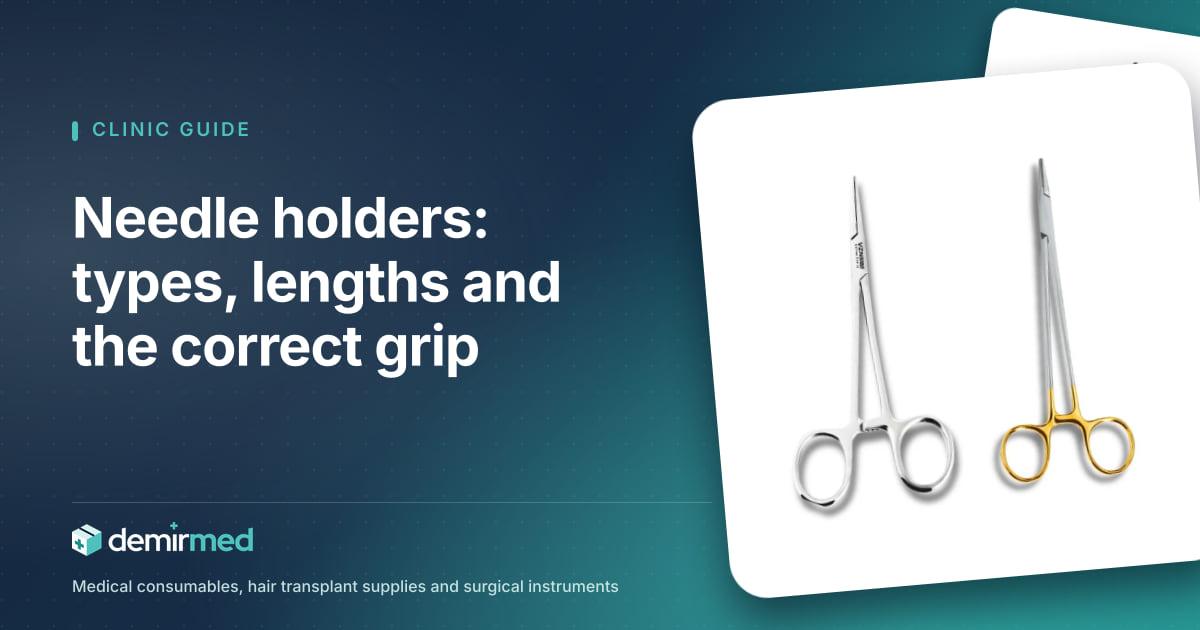
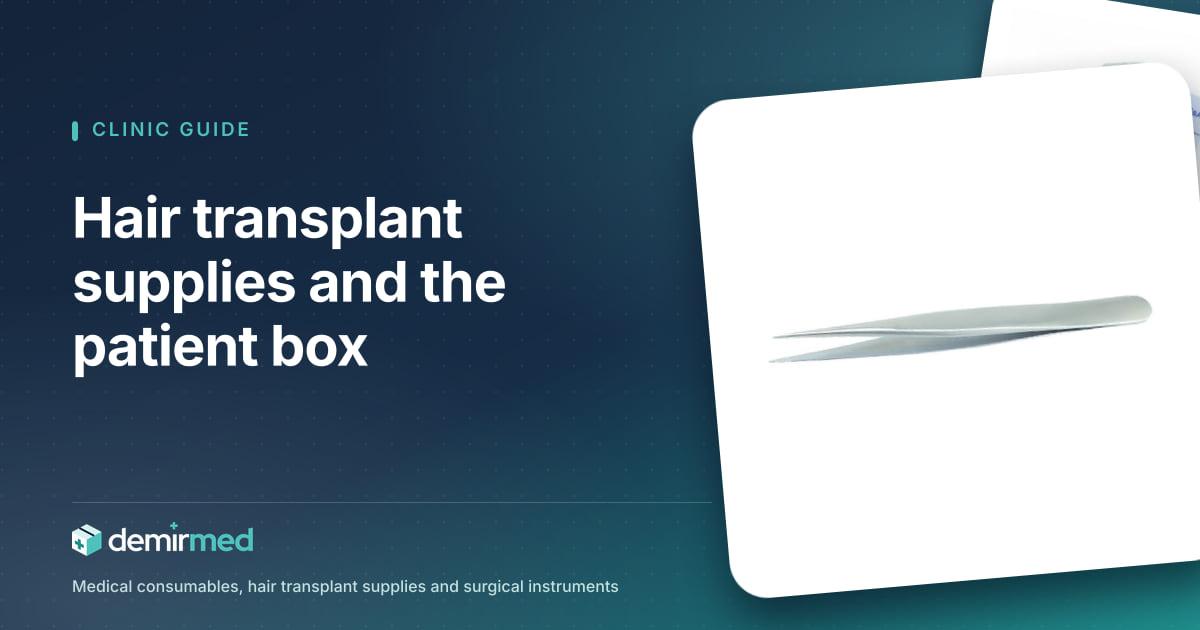
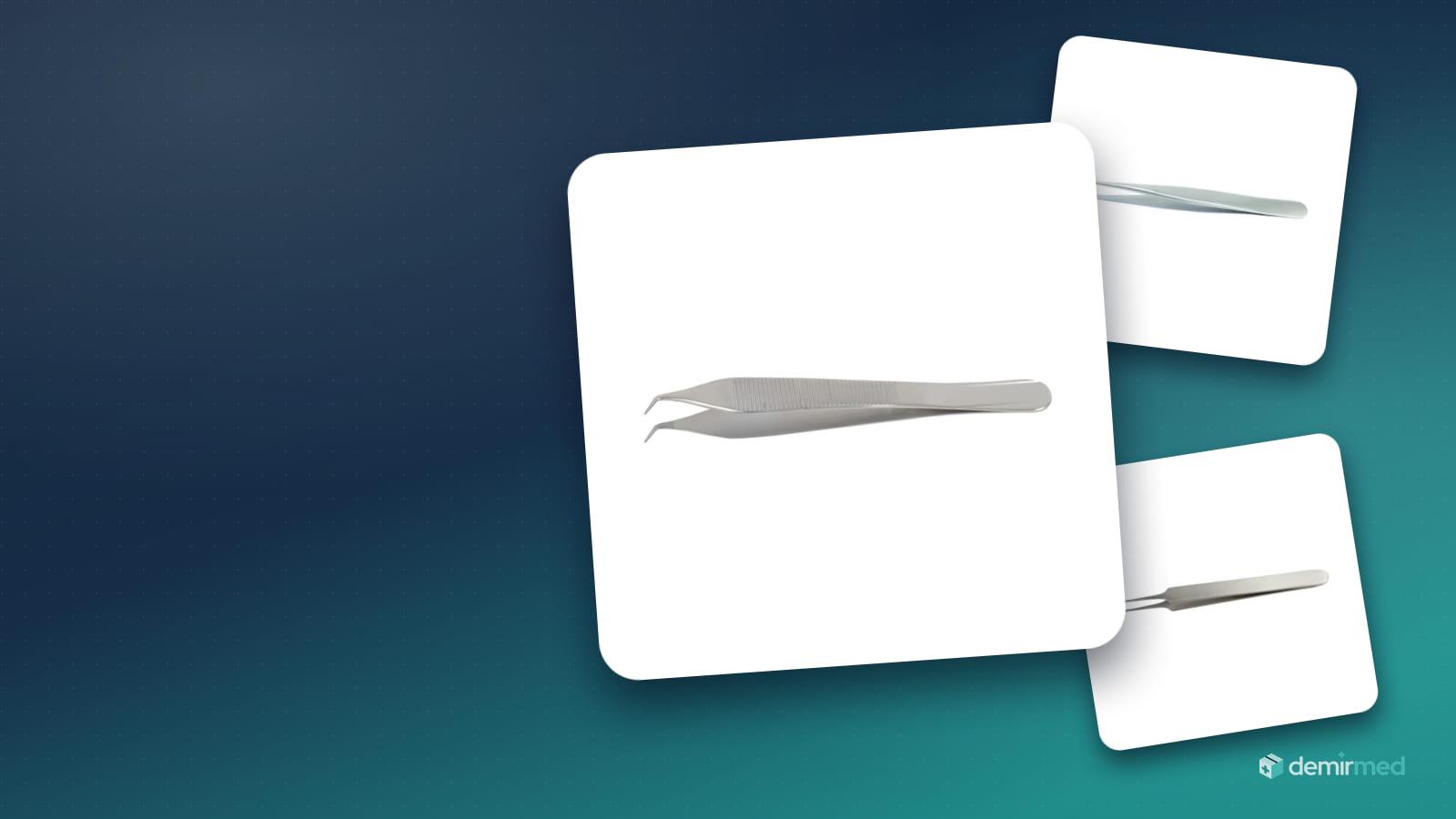
Extraction, implantation and loading forceps
Hair transplant methods: the supply differences between FUE, sapphire FUE and DHI
Hair transplant methods differ mostly not in how grafts are extracted but in how the channel is opened and how the graft is placed. In all three methods, extraction is done with a micromotor and an FUE punch. The difference lies in the channel and implantation instruments on the table.
| Method | Graft extraction | Channel opening | Implantation | Method-specific consumables |
|---|---|---|---|---|
| Classic FUE | Micromotor + FUE punch | Steel slit blade | Implantation forceps | Slit blades (box of 100) |
| Sapphire FUE | Micromotor + FUE punch | Sapphire blade + blade handle | Implantation forceps | Individually sterile sapphire blades |
| DHI | Micromotor + FUE punch | No separate channel | Implanter pen (Choi) | DHI spare needles, loading forceps |
The patient box is the same in all three methods; what changes are the tips added to it. The FUE punch diameter (0.65–0.90 mm), sapphire blade width (1.1–1.7 mm) and DHI needle diameter (0.8–1.1 mm) are chosen to the physician's preference. For the full lists by method, see the FUE hair transplant supplies and DHI hair transplant supplies pages.
What is a hair transplant patient box?
A patient box is a per-patient box of the single-use consumables used in one hair transplant operation. The clinic opens one box per operation; its items are used for that patient. Working with boxes instead of ordering items one by one has four practical benefits for a clinic:
- Preparation is shorter: the team does not collect items from the shelves on the morning of the operation; the box is opened and the table is set.
- The risk of a missing item falls: the box contents are fixed, so a forgotten or used-up item does not go unnoticed until mid-operation.
- Stock counts are easier: the number of boxes in stock directly shows how many operations the consumables will cover.
- Consumption per operation is clear: because every operation uses the same box, what one operation consumes is known.
An approved box content can be repeated as the same list in your later orders, so you do not have to describe the same box again every month.
Contents of the standard patient box
The consumable items and quantities in Demir Med's standard patient box are listed below. The list is the current content of the standard box on the quotation page; you can change the quantities, remove items or add new ones.
| Group | Item | Quantity |
|---|---|---|
| Injection | 10 cc syringe | 1 |
| Injection | 2–2.5 cc syringe | 4 |
| Injection | 5 cc syringe | 2 |
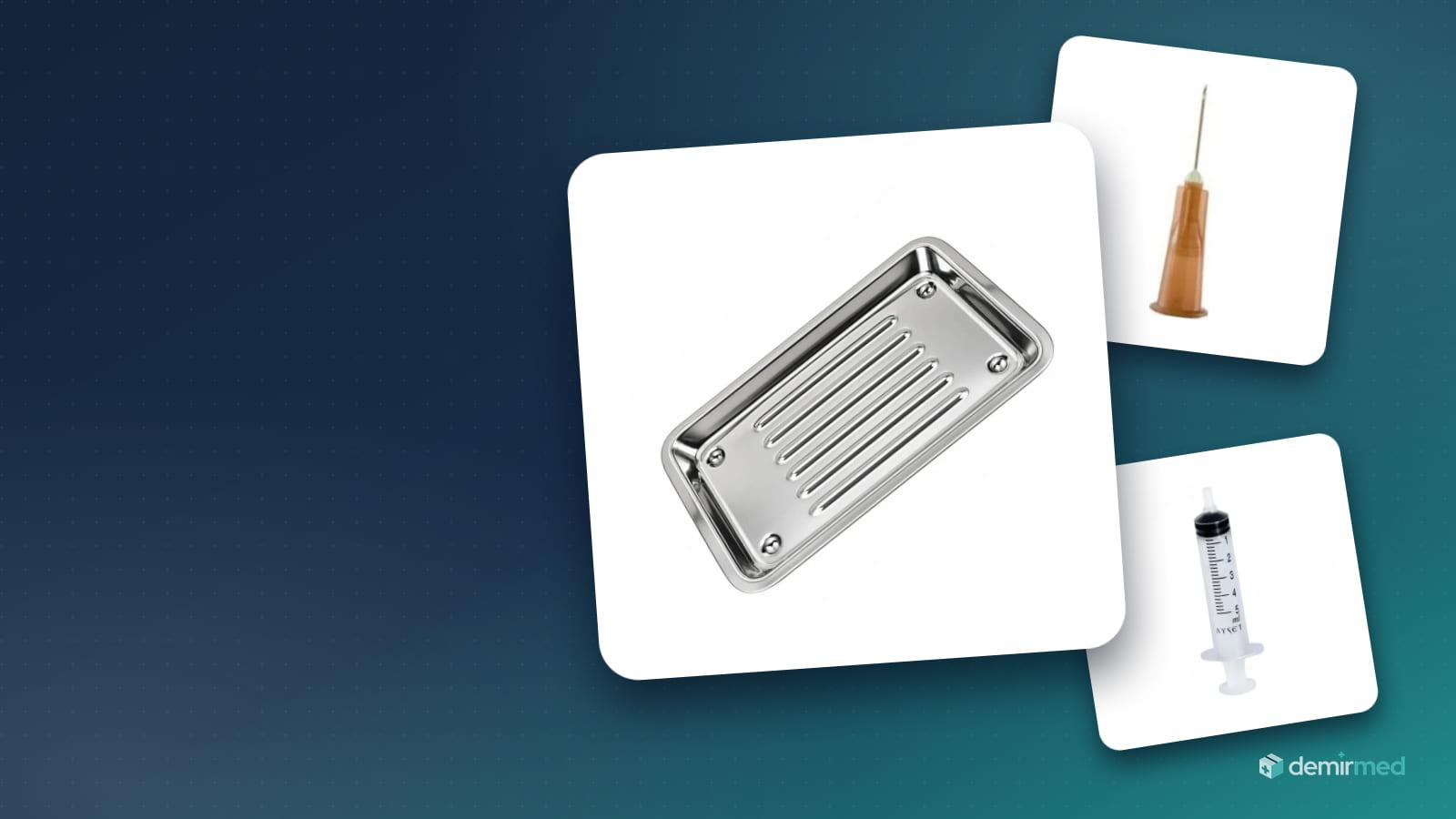
| Injection | Insulin pen needle (brown) | 4 |
| Venous access | IV set | 1 |
| Venous access | Blue cannula | 1 |
| Venous access | Isotonic 1000 cc | 2 |
| Venous access | Isotonic 500 cc | 1 |
| Gloves | Sterile gloves (powder-free) size 7 | 2 pairs |
| Gloves | Sterile gloves (powder-free) size 7.5 | 2 pairs |
| Gloves | Sterile gloves (powder-free) size 8 | 2 pairs |
| Gloves | Non-sterile gloves (powder-free) medium | 8 |
| Drapes and covers | Sterile table drape, pack of 2 (waterproof) | 1 |
| Drapes and covers | Stretcher cover | 1 |
| Drapes and covers | Underpad | 3 |
| Drapes and covers | Patient brief | 3 |
| Patient and team | Patient gown (short sleeves) | 1 |
| Patient and team | Patient slippers | 1 |
| Patient and team | Cap | 5 |
| Patient and team | Mask (3-ply) | 5 |
| Shaving | Disposable razor | 1 |
| Dressing | Swabs 10 × 10, pack of 150 | 1 pack |
| Dressing | Bandage | 1 |
| Dressing | Tape 10 × 10, 3.5 m | 1 |
| Test | HBsAg rapid test | 1 |
| Test | HCV rapid test | 1 |
| Test | HIV rapid test | 1 |
How the tests are read and what to do with a reactive result is explained in the rapid tests before a hair transplant guide; syringe and needle sizes in the syringe types guide.
Not in the box: tips added by technique
The standard box contains no FUE punches, sapphire blades, slit blades or DHI needles; these depend on the physician's technique and preferred diameters. When you request a quotation, just state the method and the diameters; the tips are added to the same quotation as separate items. The micromotor, implanter pen body, forceps and blade handle are permanent instruments, not consumables; they do not go into the box and are bought once when the clinic is set up.
Patient box
One patient, one box
The hair transplant process: before, during and after the operation
The patient box covers the operation day, but the hair transplant process is not limited to that day. A clinic plans its consumables across three periods:
- Before the operation: examination and planning, rapid tests, drawing the hairline. The tests are in the box; if further tests are used at the examination, they are stocked separately.
- Operation day: the patient box, the tips for the technique and the permanent instruments.
- After the operation: the first wash and home-care products, dressing changes, follow-ups. For post-operative shampoo, foam, spray and care kits see the hair transplant aftercare products guide; products such as the Greft Plus washing foam can also be added to the patient box.
How many hours does a hair transplant take?
The time depends on the number of grafts, the method and the size of the team; most clinics plan a hair transplant as a single working day. For supplies this means that over a long day gloves are changed several times, swab and drape use rises, and the graft cooling set-up runs all day. The glove and swab quantities in the standard box can therefore be adjusted to the size of your team; if your team is large, raise the glove count.
Build your own box
On the quotation page you start from the standard box and adapt it to your clinic:
- Choose the standard box. The items and quantities are listed.
- Change the quantities. With a larger team, raise gloves and masks; for long operations, raise swabs.
- Add or remove items. Remove what you do not use; add what you need from the list.
- Send the quotation request. Our team confirms the box contents and gets back to you.
Items often added to the box: headbands and caps with your clinic's logo, an inflatable neck pillow, a camera cover, a face shield, a long-sleeved patient gown, alcohol swabs and a post-operative washing foam. Putting the products handed to the patient after the operation into the box means the patient goes home with one package.
How many boxes to plan
With patient boxes the calculation is simple: one operation, one box. For the monthly order this formula is enough:
Monthly boxes = monthly operations × 1.1 (rounded up)
The 10% margin covers last-minute operations and replacing a damaged item. A clinic doing 20 operations a month, for example, plans 22 boxes. The technique-dependent tips (punches, sapphire blades, DHI needles) are calculated separately from the box, because their quantity per case varies with the physician and the number of grafts; for average consumption per case see the table in the hair transplant minimum equipment list guide.
For clinics with a steady workload, boxes can be shipped on a monthly schedule, so you do not need to keep more than a few weeks of boxes in stock.
Box plan
Monthly operations × 1.1 = boxes
Patient box or item-by-item ordering?
| Topic | Patient box | Item-by-item ordering |
|---|---|---|
| Operation preparation | Open the box, set the table | Items are collected from the shelves |
| Risk of a missing item | Low; the contents are fixed | A used-up item may go unnoticed |
| Stock count | Number of boxes = number of operations | Every item is counted separately |
| Consumption per operation | Clear | Has to be calculated |
| Flexibility | The box contents are set once | Rebuilt with every order |
Item-by-item ordering can make sense for clinics that work with very different techniques, or for new clinics that do not yet know their consumption. Where consumption has settled, the box saves time and simplifies stock control.
Checklist for buying hair transplant supplies
- Are the physician's method (FUE, sapphire FUE, DHI) and the punch, blade and needle diameters written down?
- Are the glove sizes and quantities right for the size of your team?
- Is there an item you want to remove from or add to the standard box?
- Have you calculated your monthly operations plus the 10% margin?
- Are the permanent instruments (micromotor, implanter pen, forceps, blade handle) complete, with spares?
- Is the expiry date of the consumables far enough ahead for your rate of use, and are lot numbers on the delivery note?
- Are the sharps container and medical waste arrangements in place?
- Have you asked for a scheduled delivery programme?
Products
All instruments and consumables used in a hair transplant are listed on the hair transplant supplies page and in the Hair Transplant category; the technique tips in the FUE punch, sapphire tip, slit blades, DHI implanter pen and DHI needle categories; forceps in the hair transplant forceps category. For the box consumables see the gloves, syringes, patient care and wound care categories. Send your patient box and the tips for your technique as one list on the quotation page; a written quotation follows within 1 business day. In-stock orders confirmed before noon are delivered the same day within İstanbul and handed to the courier the same day for other provinces.