Short answer
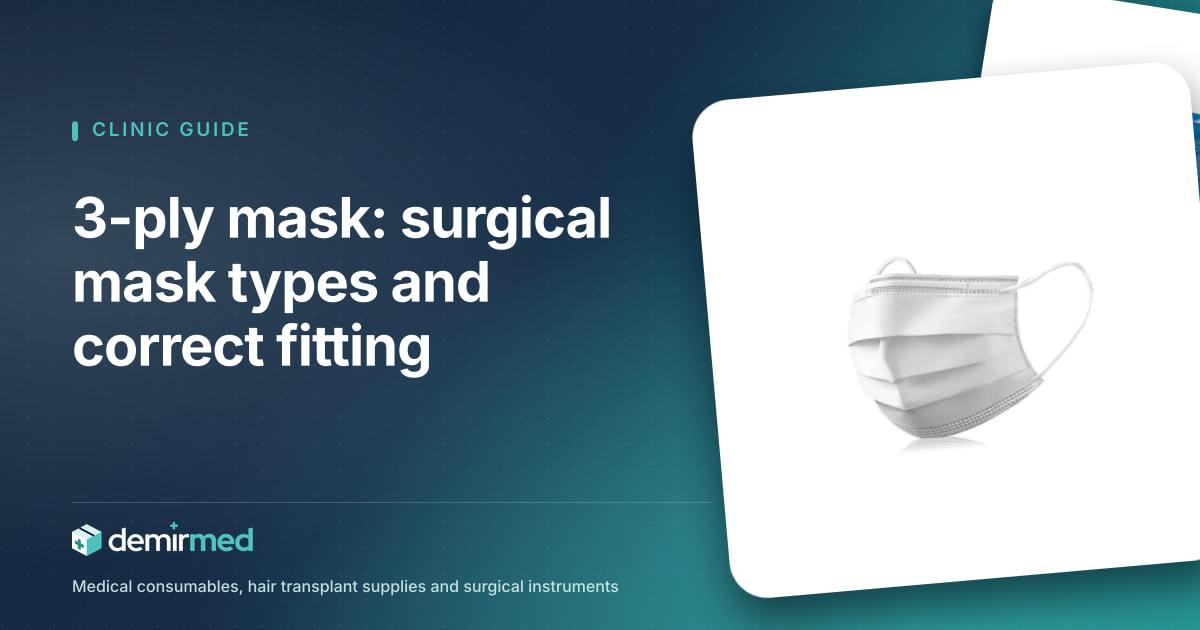
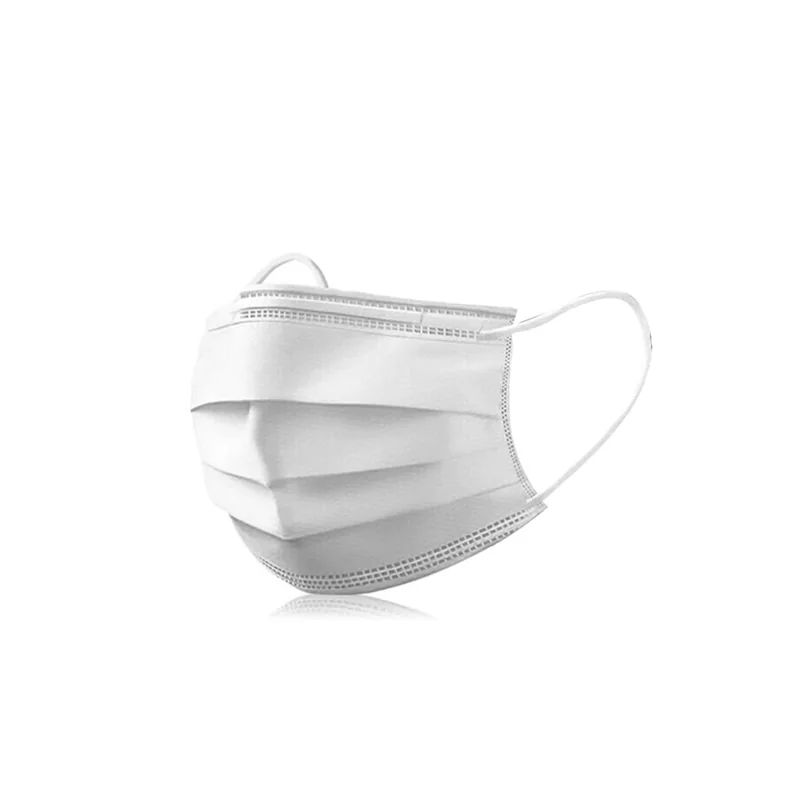
A 3-ply mask is a single-use face mask with non-woven outer and inner layers and a filter material in the middle. It is worn with ear loops, the nose wire is pressed to the nose and, when its pleats are opened, it covers from the nose to under the chin. In clinics the 3-ply surgical mask is used as a droplet barrier between staff and patient during examinations, dressings, minor procedures and hair transplant operations.
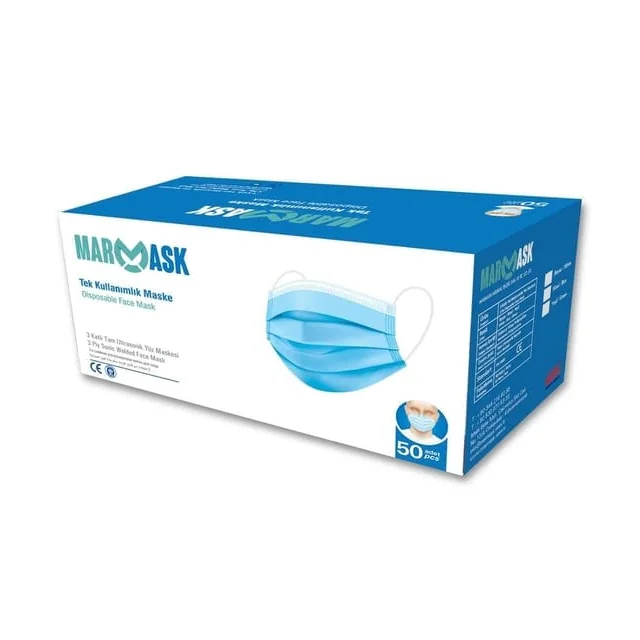
Under the European standard EN 14683, surgical masks fall into three types: Type I, Type II and splash-resistant Type IIR. A mask's type is printed on the box label. An FFP2 mask, by contrast, is not a surgical mask but a respirator that filters the air the wearer breathes. Which mask is used for which procedure is set by the facility's infection control protocol. The Demir Med catalogue lists the 3-ply surgical mask and the 3-ply mask, box of 50; both are sold per box by quotation.
What is a 3-ply surgical mask? What do the layers do?
Each of the three layers has its own job.
| Layer | Material | Job |
|---|---|---|
| Outer layer | Non-woven fabric, usually coloured | The surface that meets incoming droplets and splashes first |
| Middle layer | Filter layer | Provides the mask's bacterial filtration |
| Inner layer | Non-woven fabric, usually white | Soft surface against the skin that holds moisture |
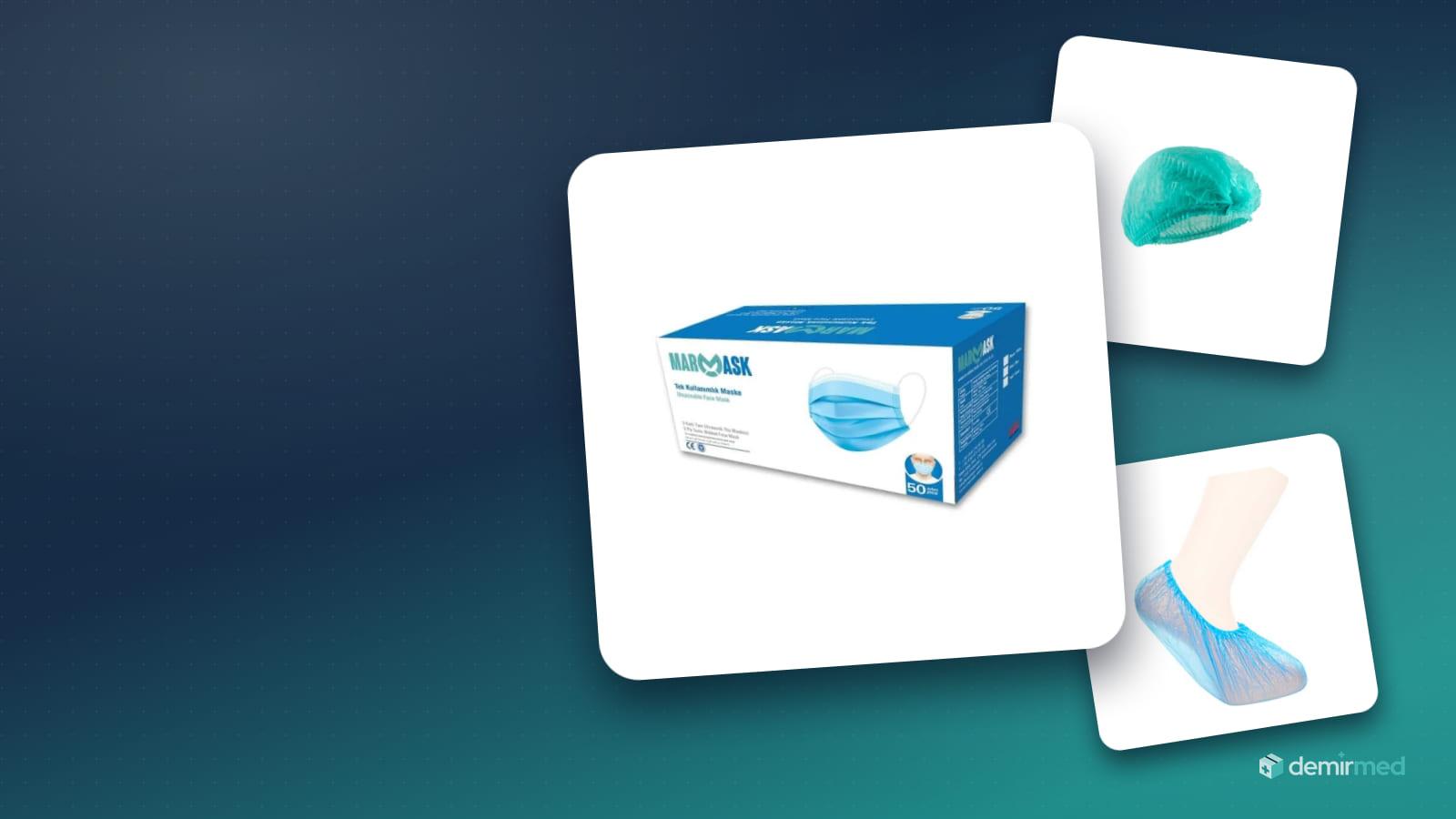
The top edge of the mask has a mouldable nose wire and the sides have elastic ear loops. When the pleats on the front are opened, the mask reaches from the bridge of the nose to under the chin. The 3-ply surgical mask in the catalogue has this construction: non-woven outer and inner layers with a filter layer in the middle, ear loops and a nose wire; single-use and non-sterile, in boxes of 50.
Surgical mask types: Type I, Type II and Type IIR
In Europe surgical masks are classified under EN 14683. The standard measures the mask's bacterial filtration efficiency (BFE), its breathing resistance and, for Type IIR, its splash resistance against synthetic blood.
| Type | Bacterial filtration (BFE) | Splash resistance | Typical use |
|---|---|---|---|
| Type I | At least 95% | Not tested | Patients and visitors, general use during outbreaks |
| Type II | At least 98% | Not tested | Examinations and low splash-risk procedures |
| Type IIR | At least 98% | Tested (synthetic blood, 16 kPa) | Operating rooms and procedures with a risk of blood and body-fluid splashes |
The letter "R" stands for splash-resistant. The type cannot be read from the number of plies: two different 3-ply masks can be of different types. That is why the type on the box label is checked before ordering; at Demir Med the standard and type of the product are also stated in the quotation.

Surgical mask types
Type I · Type II · Type IIR
The difference between an FFP2 mask and a 3-ply mask
FFP2 masks and 3-ply surgical masks are often confused, but they are designed for different jobs.
| Feature | 3-ply surgical mask | FFP2 mask |
|---|---|---|
| What kind of product? | Medical face mask | Respiratory protective device (respirator) |
| Standard | EN 14683 | EN 149 |
| Main purpose | Limit droplets spreading from the wearer; a barrier against splashes | Filter particles from the air the wearer breathes |
| Fit on the face | Air can pass around the edges | Designed to seal against the face |
| Use | Examinations, dressings, surgical team, patients | Specific situations with a risk of airborne transmission |
Which procedure calls for an FFP2 and which for a surgical mask is decided by the facility's infection control protocol. The masks in the Demir Med catalogue are 3-ply surgical masks.
How do you put on a 3-ply mask? Which side faces out?
The right side and the right way up matter; a mask worn the wrong way does not fit the face and droplets collect in the pleats.
- Clean your hands. Take the mask from the box by the ear loops only.
- Find the top edge. The edge with the nose wire goes at the top.
- The coloured side faces out. On masks with two different coloured sides, the coloured side faces outwards and the white side faces the skin. The pleats on the front should open downwards.
- Fit the loops. Put the ear loops over both ears.
- Press the nose wire. Shape the nose wire to the bridge of the nose with the fingers of both hands.
- Open the pleats. Pull the mask down to cover under the chin; there should be no gaps at the sides.
- Do not touch the front when removing it. Remove the mask by the ear loops, put it in the medical waste bin and clean your hands again.
When should the mask be changed?
A 3-ply mask is single-use; a mask that has been taken off is not put back on. The facility's protocol sets when it is changed; as a general rule a mask is replaced:
- When it becomes damp or wet,
- When blood or body fluid splashes on it or it gets soiled,
- When it tears or its nose wire or loops fail,
- When entering a sterile field and between the procedures the protocol specifies.
During long operations (a hair transplant day, for example) mask use is therefore several per person per day; the monthly plan uses the calculation below.
How to read the box label
Look for the following on a mask box:
| Label information | What it tells you |
|---|---|
| Standard and type (EN 14683, Type I/II/IIR) | The mask's filtration and splash class |
| Number of plies | 3-ply construction |
| Quantity per box | For example 50; the monthly calculation uses this number |
| Lot number | Production batch; traced in complaints and recalls |
| Expiry date | Stock is rotated by this date |
| Manufacturer and CE mark | Manufacturer details and conformity marking |
CE and UTS documents for the products are shared with the quotation once verified. The lot number and expiry date are also on the delivery note.
Protective equipment used with the mask
In a clinic the mask is not used on its own; it forms a set with hair and shoe covers, a gown and gloves. For long procedures such as hair transplants, the same set is prepared for the team and the patient.
| Equipment | What does it cover? | Catalogue product |
|---|---|---|
| Cap | The hair; limits hair shedding | Cap: non-woven, elasticated edge, one size, 100 per pack |
| Shoe cover | The shoes; limits dirt carried in from outside | Shoe cover: elastic ankle, one size, 100 per pack |
| Box gown | Clothing; against splashes and contact | Box gown: long sleeves, ties at the back, elastic cuffs, 10 per pack |
| Gloves | The hands | Sterile surgical gloves and non-sterile examination gloves |
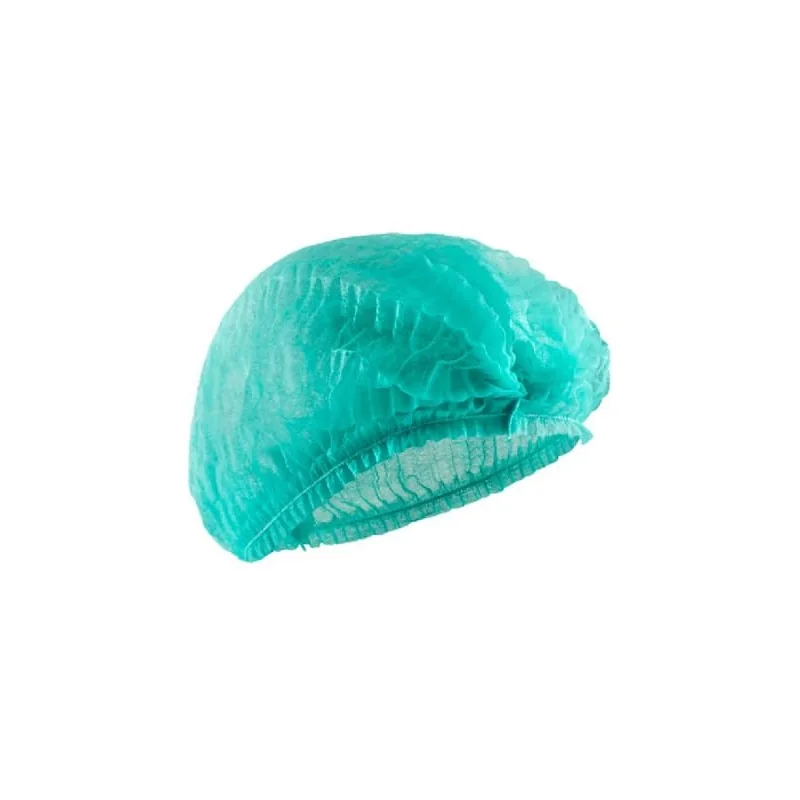
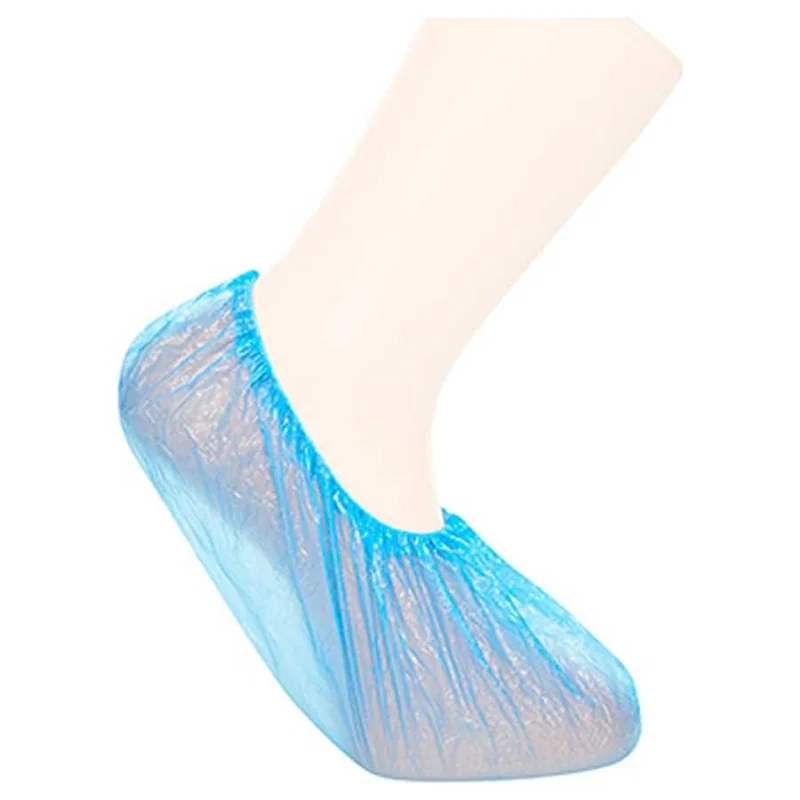
For choosing examination gloves see the nitrile or latex guide, and for packing all these supplies into one box for a hair transplant operation see the hair transplant patient box guide.
How many boxes of 3-ply masks do you need? The monthly calculation
Mask use depends on the number of staff, the length of the shift and the masks given to patients. A simple formula is enough:
Monthly masks = (staff × masks per person per day × working days) + (monthly patients × masks per patient), then add a 10% margin and round up to the box size.
Example: a team of 6, 3 masks per person per day, 22 working days a month and 1 mask per patient for 20 operations a month:
- Staff: 6 × 3 × 22 = 396
- Patients: 20 × 1 = 20
- Total: 416; with the margin 458
- In boxes of 50: 10 boxes
The same calculation works for caps and shoe covers. For clinics with steady use, a monthly case-pack delivery can be planned when buying 3-ply masks wholesale; see the patient care textiles and protective equipment wholesale page for details.
Monthly calculation
6 staff × 3 masks × 22 days + 20 patients
Purchasing checklist
- Which type does your facility's protocol require for which procedure: Type I, Type II or Type IIR?
- Does the box label state the standard (EN 14683) and the type?
- Are the nose wire and ear loops sound, and does the mask sit on the face without gaps at the sides?
- Have you calculated the quantity per box against your monthly use?
- Are the lot number and expiry date on the delivery note?
- Have caps, shoe covers, gowns and gloves been added to the same quotation?
- Are the masks stored dry, clean and out of the sun, in unopened boxes?
Products
The protective equipment category lists the 3-ply surgical mask, the 3-ply mask, box of 50, the cap, the shoe cover and the box gown; the gloves category lists sterile and non-sterile gloves. Send your list through a quote request; a written quotation with quantities and delivery time follows within 1 business day. In-stock orders confirmed before noon are delivered the same day within İstanbul and handed to the courier the same day for other provinces.