Short answer
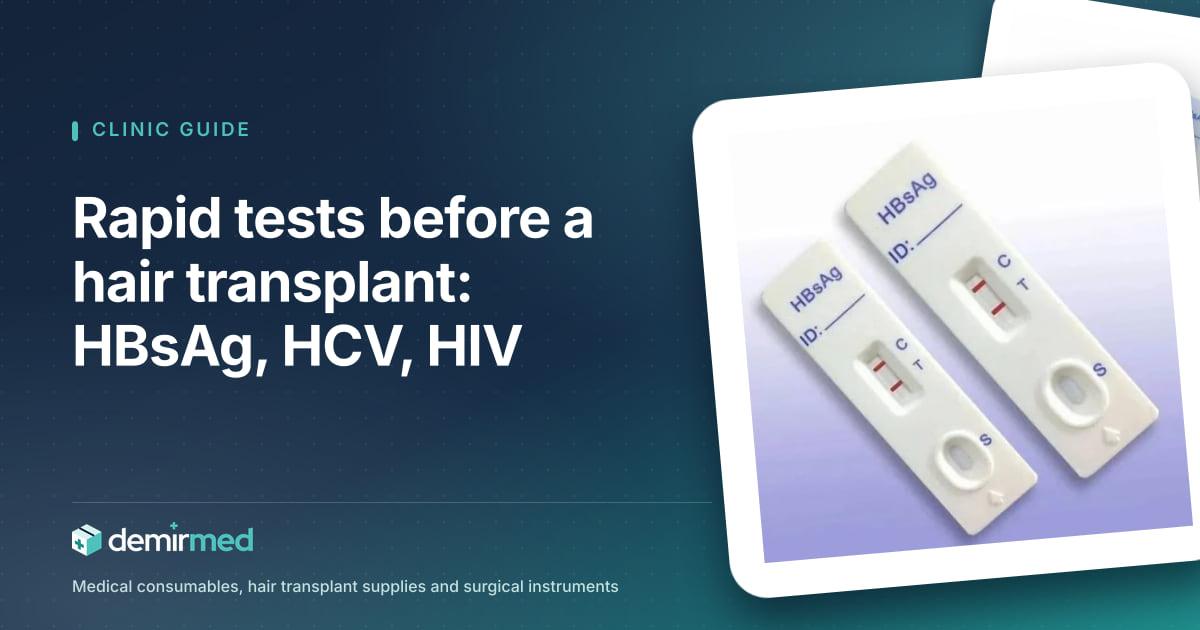
Before a hair transplant the patient is usually screened with three tests: HBsAg (hepatitis B surface antigen), anti-HCV (hepatitis C antibody) and anti-HIV (antibodies to HIV-1 and HIV-2). Many clinics run this screening with rapid cassette tests: sample and buffer are dropped onto the cassette, and the control (C) and test (T) lines are read by eye within the time given in the kit instructions. A cassette test is a screening test; a reactive result is confirmed in a laboratory, and the physician decides which tests to request and how to interpret them. The Demir Med catalogue lists the HBsAg Cassette Test, the HCV Cassette Test and the HIV Cassette Test in boxes of 25 tests, and the yellow-top 8.5 ml tube for serum in boxes of 100.
Which blood tests are done before a hair transplant?
A hair transplant is a procedure of several hours with contact with blood, so the tests before it serve two purposes: assessing whether the patient is fit for the procedure and planning how the team works safely. The list differs by physician and by the clinic's procedure; screening for the three blood-borne infections is the part that does not change.
| Test | What it looks for | Sample | Product in the catalogue |
|---|---|---|---|
| HBsAg | Hepatitis B surface antigen | Serum, plasma or whole blood | HBsAg Cassette Test, 25 tests per box |
| Anti-HCV | Antibodies to the hepatitis C virus | Serum, plasma or whole blood | HCV Cassette Test, 25 tests per box |
| Anti-HIV | Antibodies to HIV-1 and HIV-2 | Serum, plasma or whole blood | HIV Cassette Test, 25 tests per box |
A full blood count, coagulation tests and blood glucose may be requested as well. Those are run in a laboratory; for fingertip blood glucose checks the catalogue has a blood glucose meter kit. Which tests are requested is always the physician's decision.
Screening tests
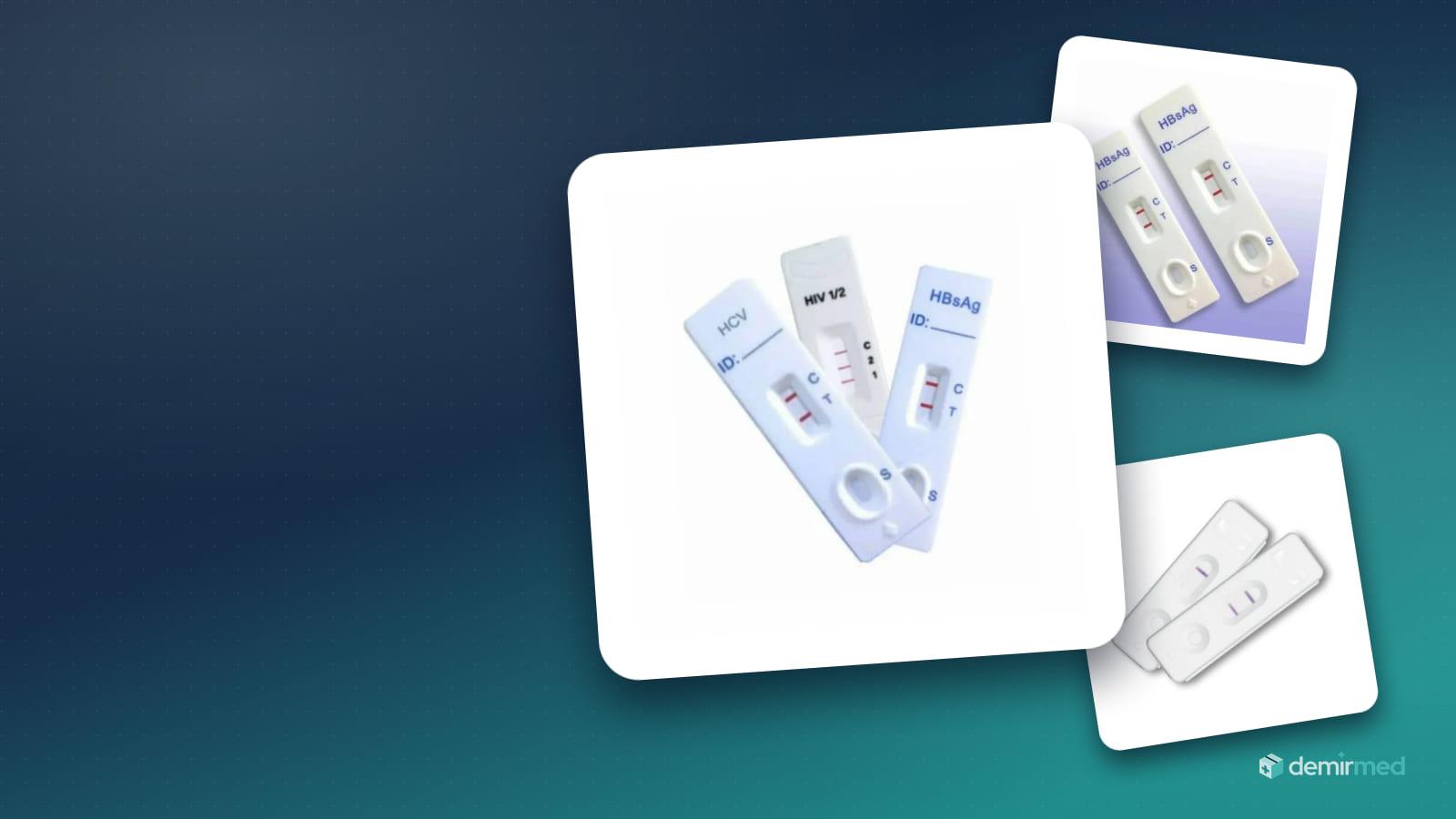
Three tests, three separate cassettes
What is a rapid cassette test and how does it work?
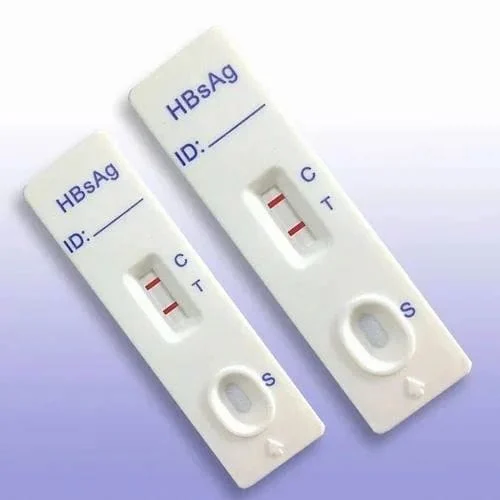
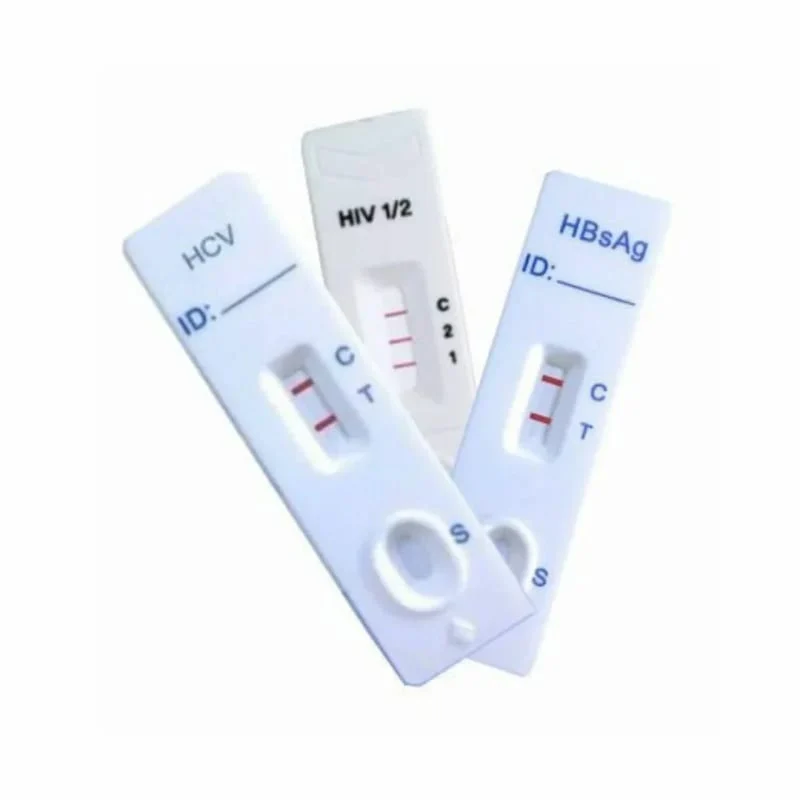
A rapid cassette test is a single-use diagnostic test that works by immunochromatography. Inside the cassette is a strip. Blood or serum dropped into the sample well (S) travels along the strip with the buffer; if the antigen or antibody being looked for is in the sample, a coloured line forms in the test zone (T). The line in the control zone (C) shows that the sample has run along the strip and the test is valid.
Three properties matter to a clinic:
- No instrument is needed: the result is read by eye; a centrifuge is needed only when serum is used.
- It can be done at the point of care: the sample is taken, applied to the cassette and read in the same visit.
- The result is qualitative: reactive or non-reactive; it gives no quantity.
All three cassette tests in the catalogue are used with serum, plasma or whole blood, carry an internal control line, are for in vitro diagnostic use only and are intended for healthcare professionals. Sample volume, number of buffer drops and reading time differ from kit to kit; the instructions for use in the box always decide.
Whole blood or serum? When is the yellow-top tube needed?
Cassette tests work with three sample types; which one is chosen depends on the clinic's workflow.
| Sample | How it is obtained | What is needed | When it is preferred |
|---|---|---|---|
| Whole blood | Venous blood is applied directly | Blood collection supplies, the kit dropper | At the point of care, when a result is wanted without a centrifuge |
| Serum | Blood clots in a gel tube and is centrifuged | Yellow-top 8.5 ml tube, centrifuge | When other tests are run from the same sample |
| Plasma | Centrifuged in an anticoagulant tube | Anticoagulant tube, centrifuge | When the laboratory procedure calls for plasma |
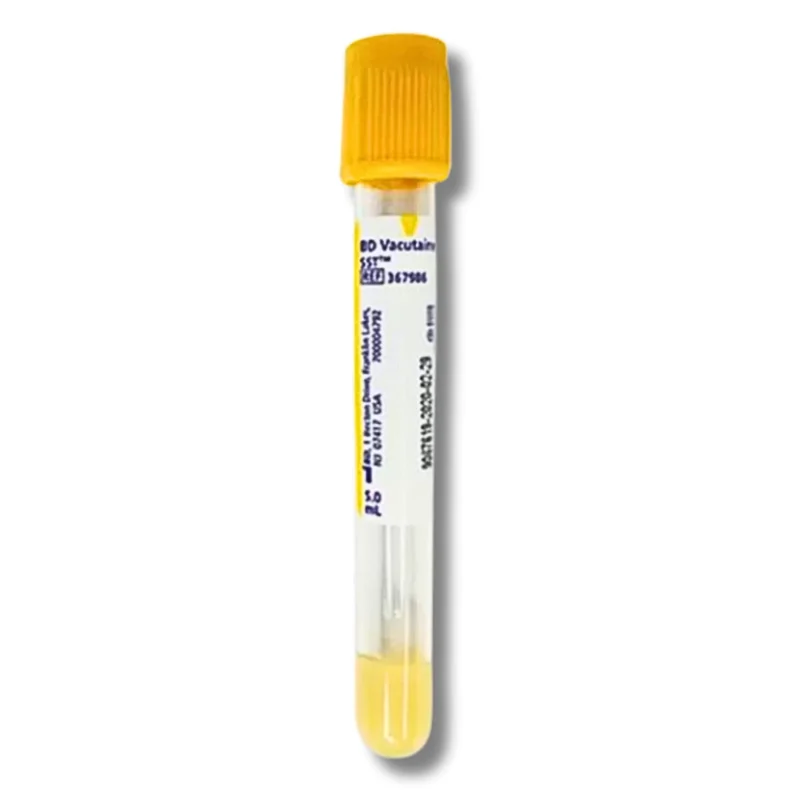
The yellow-top tube (SST) is a vacuum blood collection tube with a clot activator and a separator gel. The activator speeds up clotting; after centrifugation the gel forms a barrier between serum and clot, and the serum is taken straight from the tube. The tube in the catalogue draws 8.5 ml, is used with a standard vacuum blood collection needle and holder, and is sold in boxes of 100. The number of inversions and the centrifuge settings are given in the tube's instructions for use.
Before blood is drawn the puncture site is wiped with an alcohol swab and the alcohol is left to dry by itself; for regular use the box of 100 is a separate product.
How is a cassette test run, step by step?
The order below shows the general flow; volumes and times come from the kit instructions.
- Preparation: check the expiry date and lot number on the box; bring the kit and the sample to the temperature stated in the instructions.
- Identification: take the cassette out of its pouch, lay it on a flat surface and write the patient code in the ID field. Do not leave an opened cassette waiting.
- Sample: drop the stated volume of whole blood, serum or plasma into the sample well (S) with the kit dropper.
- Buffer: if the instructions call for it, add the stated number of buffer drops.
- Waiting: start a timer; do not move the cassette during this time.
- Reading: read the result within the time window given in the instructions. Lines that appear after that window are not evaluated.
- Record and waste: enter the result with the lot number in the patient file; the cassette and dropper go to medical waste, the needle to the sharps container.
When all three tests are run in the same visit, lay the cassettes side by side and label each one; never use the dropper of one cassette on another.
How is a cassette test result read?
The control line is read first: without a C line the test is invalid, whatever shows in the T zone.
| C line | T line | Result | What to do |
|---|---|---|---|
| Present | Absent | Non-reactive | Record the result; interpretation is the physician's |
| Present | Present (even if faint) | Reactive | Refer to a laboratory for confirmation |
| Absent | Present or absent | Invalid | Repeat the test with a new cassette |
Common reading errors:
- Reading late: a line may appear on a cassette left beyond the stated time; that line is not a result.
- Ignoring a faint line: a faint line in the T zone counts as reactive too.
- Too little or too much sample: if the number of drops departs from the instructions, the strip may not run properly.
- A cold kit: a kit just out of the refrigerator is not used until it reaches the stated temperature.
Some HIV cassettes carry separate test lines for HIV-1 and HIV-2; what each line means is read from the diagram in the kit instructions.
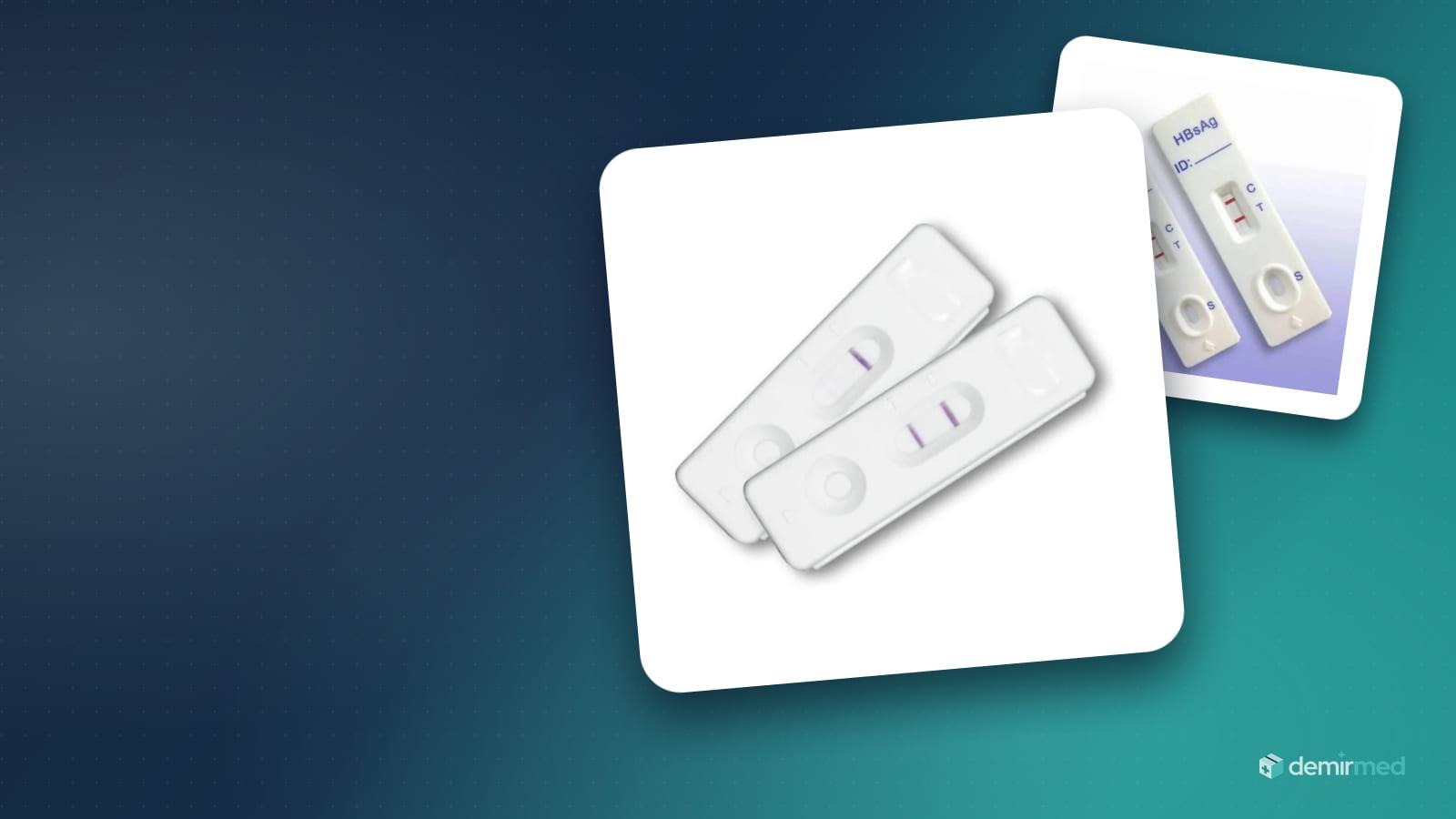
Reading the result
First the C line, then the T line
What to do with a reactive result
A cassette test is a screening test; a reactive result is not a diagnosis. A reactive result is confirmed with confirmatory laboratory methods; for HIV, confirmation follows the national algorithm. Three rules hold for the clinic at this point:
- The physician decides: telling the patient, requesting the confirmatory test and planning the procedure are the physician's responsibility.
- Confidentiality: test results are health data; they are recorded so that only authorised staff can see them, and no test is run without the patient's informed consent.
- A non-reactive result is not a guarantee: early in an infection a screening test can be non-reactive. The team therefore works with the same precautions for every patient, whatever the result.
Staff safety during blood collection and testing
Standard precautions are the same for every patient; they are neither relaxed nor tightened according to a test result.
- Gloves: powder-free examination gloves are worn for blood collection and testing and changed between patients. For choosing gloves see nitrile or latex.
- Sharps: needles are not recapped; the needle goes into the Sharpbox at the point of use.
- Surfaces: the bench where the test is run is protected with a single-use cover against spills and disinfected at the end.
- Labels: tube and cassette are labelled beside the patient; an unlabelled sample is not tested.
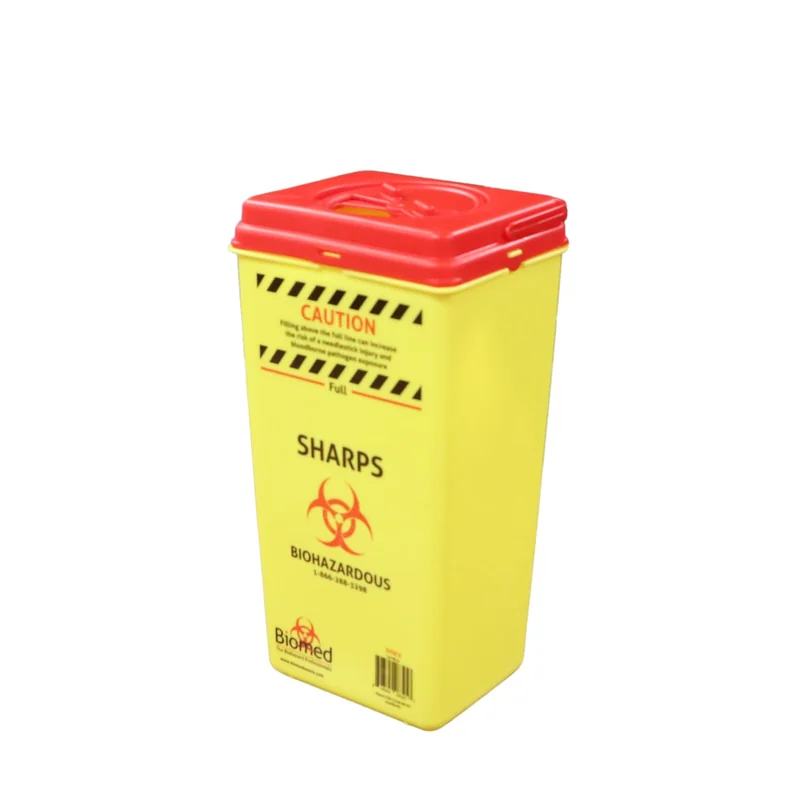
For choosing syringes and needles see syringe types and needle colour codes.
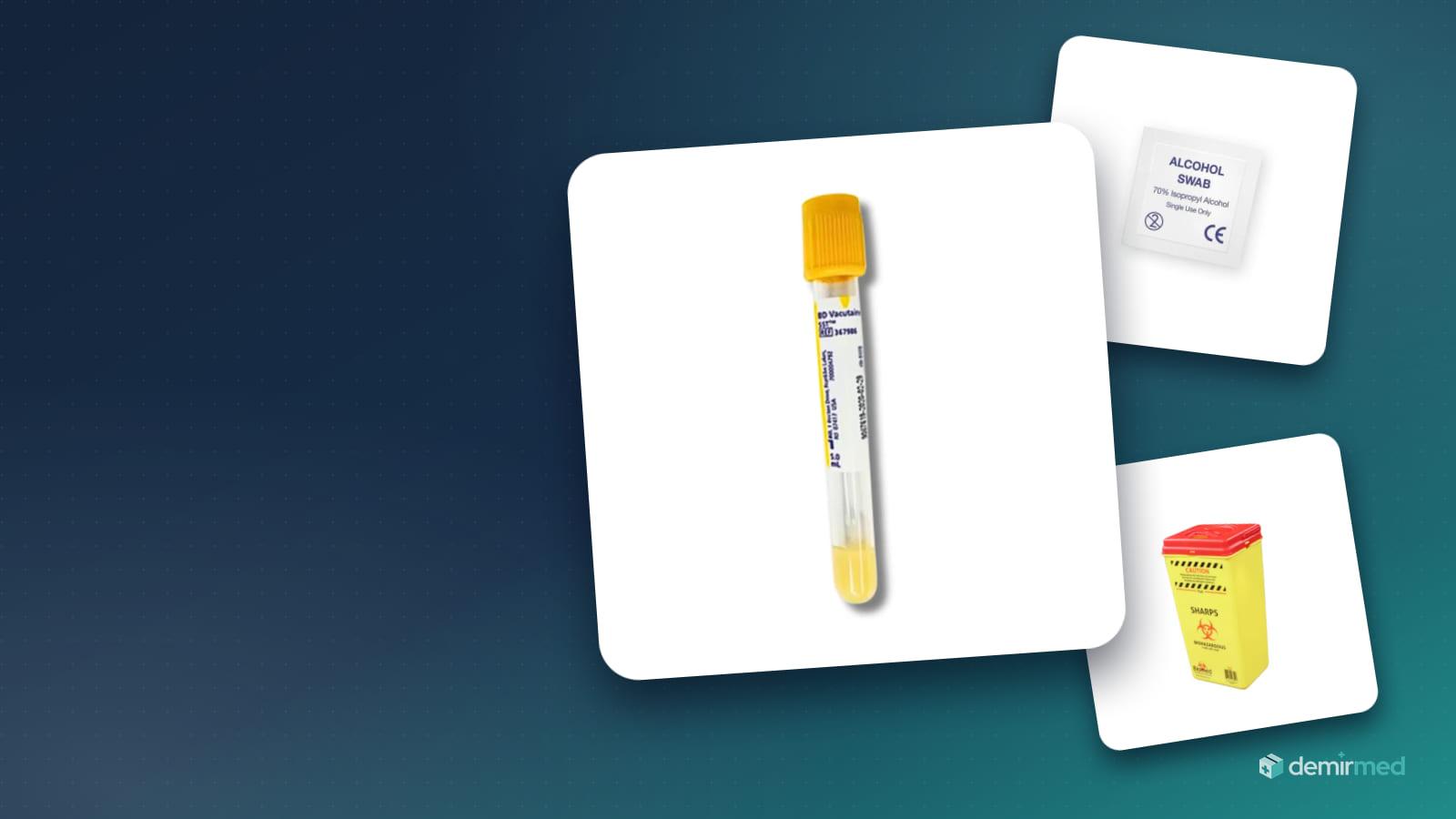
Sample and safety
Tube, alcohol swab and sharps container
Storage, expiry date and lot tracking
- Kits are stored under the conditions in the manufacturer's instructions for use; keep within the temperature range on the box and do not freeze the kit.
- A cassette stays in its sealed pouch until the moment of use; a cassette with a torn or opened pouch is not used.
- Buffer bottles and droppers of different lots are not mixed.
- The box with the nearest expiry date goes to the front (first in, first out).
- Lot number and expiry date are stated on the delivery note; entering the lot number of every test in the patient record makes tracing back easier.
Monthly quantity plan: how many boxes are needed?
One cassette of each of the three tests is used per patient; a small allowance covers invalid results and repeats. Boxes hold 25 tests, so the sum is rounded up to boxes.
| Patients per month | Cassettes per test (with allowance) | Boxes per test (25 each) | Total for three tests |
|---|---|---|---|
| 20 | 22 | 1 | 3 boxes |
| 50 | 55 | 3 | 9 boxes |
| 100 | 110 | 5 | 15 boxes |
A clinic that works with serum makes the same sum for tubes: one yellow-top tube per patient, boxes of 100. Gloves, alcohol swabs and sharps containers follow the number of blood draws. To plan all consumables of a case, use the table in the minimum supply list for hair transplantation.
Purchasing checklist
- All three tests are on the list: HBsAg, anti-HCV, anti-HIV (HIV-1 and HIV-2).
- The sample type fits the clinic's workflow: whole blood, serum or plasma.
- Box content is stated in the quotation: number of cassettes, buffer, droppers.
- If serum is used, yellow-top tubes and a centrifuge are planned.
- The expiry date is long enough for the rate of use; the lot number is on the delivery note.
- A suitable cabinet or refrigerator is set aside for the storage condition.
- Gloves, alcohol swabs and a sharps container are in the same order.
- The record form is ready: patient code, test, lot, result, staff member who read it.
- CE and UTS documents are requested at the quotation stage and shared once verified.
Related products in the Demir Med catalogue
Screening tests are in the Rapid Tests category, tubes and meters in Diagnostic and Test Products: the HBsAg Cassette Test, the HCV Cassette Test, the HIV Cassette Test, the yellow-top 8.5 ml tube and the blood glucose meter kit. For protective consumables see the Gloves category. Products are sold by quotation: state your monthly number of patients and the sample type you work with and request a quote; a PDF quotation is sent within 1 business day.