Short answer
Scalpel blade numbers describe the shape and size of the blade; a higher number is not "sharper", only different in form. Small blades (10, 11, 15) fit a No 3 scalpel handle, large blades (20–24) fit a No 4 handle. No. 10 is curved with a wide belly, No. 11 is a pointed triangle, No. 15 is a small No. 10 for short, precise incisions; 20–24 are larger versions of the same shapes. The Demir Med catalogue lists individually packed, sterile, carbon steel Scalpel Blades in boxes of 100 and a stainless steel, autoclavable Scalpel Handle per piece; state the blade number and the handle number in your quote request. Which blade is used for which incision is the physician's decision; this guide covers the numbers, handle fit, safe handling and purchasing.
Scalpel blade numbers: which blade is used for what?
A scalpel has two parts: a reusable handle and a single-use blade. Blades come in two series: the 10 series are small blades, the 20 series are larger versions of the same shapes. The number is stamped on the base of the blade or printed on its pack.
| Blade number | Shape | Common use in a clinic | Handle |
|---|---|---|---|
| 10 | Curved, wide belly | Skin and subcutaneous incisions, general incision | No 3 |
| 11 | Pointed triangle with a straight edge | Stab incisions, abscess drainage, narrow and precise cuts | No 3 |
| 15 | A small No. 10 with a short curve | Short, precise incisions, small lesion excision, plastic surgery | No 3 |
| 20 | A large No. 10 | Wide skin and tissue incisions | No 4 |
| 21 | Slightly larger than 20, curved | Wide incisions | No 4 |
| 22 | Larger than 21, curved | Thick tissue, long incisions | No 4 |
| 23 | Leaf-shaped | Long, straight incisions | No 4 |
| 24 | Semicircular | Wide and thick tissue incisions | No 4 |
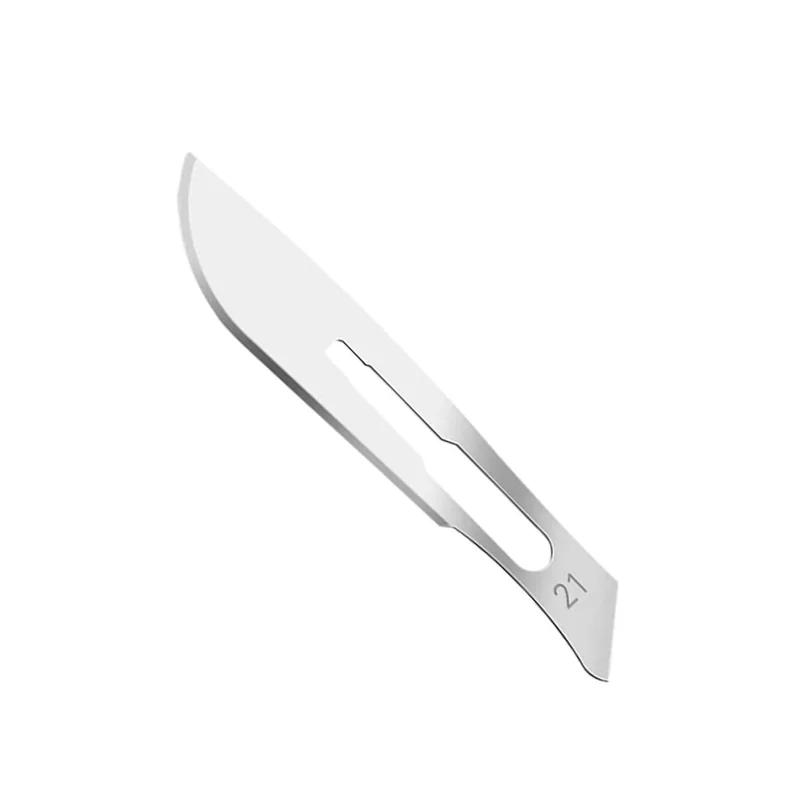
The uses in the table are general information; choosing a blade for the site, depth and length of an incision is the physician's decision. Sub-types exist as well (for example 15C with a finer edge); write them in the quote request if needed.
Blades 10, 11 and 15: the small series
These three are the ones most often on the tray in outpatient, minor surgery and aesthetic work. No. 10 cuts with its belly and suits long, single-stroke skin incisions. No. 11 works with its point and is preferred for entry at a narrow spot, drainage and suture removal. No. 15 gives control in small areas thanks to its short curve; it is the standard blade for small lesions and facial incisions.
Blades 20–24: the large series
These are used for wide incisions in the operating theatre and fit only a No 4 handle. Nos. 20, 21 and 22 are growing sizes of No. 10; 23 is leaf-shaped and 24 semicircular. They do not go on the small handle: the slot is a different width.
Which blade goes on the tray for which job?
The pairing below shows how a tray is usually prepared in outpatient and minor surgery rooms. It is not a recommendation but a general frame for whoever writes the order list; the physician chooses the blade.
| Job | Blade usually on the tray | Handle |
|---|---|---|
| Small lesion and mole excision | 15 | No 3 |
| Abscess drainage, narrow-entry incision | 11 | No 3 |
| Short skin incision, wound edge revision | 10 or 15 | No 3 |
| Suture removal | 11 | No 3 |
| Long, deep skin incision | 20, 21 or 22 | No 4 |
Two numbers are often laid out for one procedure: one for the incision, one for fine revision. Stock planning therefore puts the two most used numbers first and keeps the others with a spare box each.
Where is the number, and what does the pack say?
The number is in two places: stamped on the base of the blade where it meets the handle, and printed on the foil pack of each blade. The pack also states the material (carbon or stainless steel), the sterile mark with the sterilisation method, the single-use symbol, the lot number and the expiry date. The box repeats this and gives the quantity. Where more than one number goes on the tray, the blades are laid out in their foil with the number readable; a blade that has been opened but not used is no longer sterile and is discarded. One box holds one number only, so a clinic that uses two numbers opens two boxes and counts its stock per number.
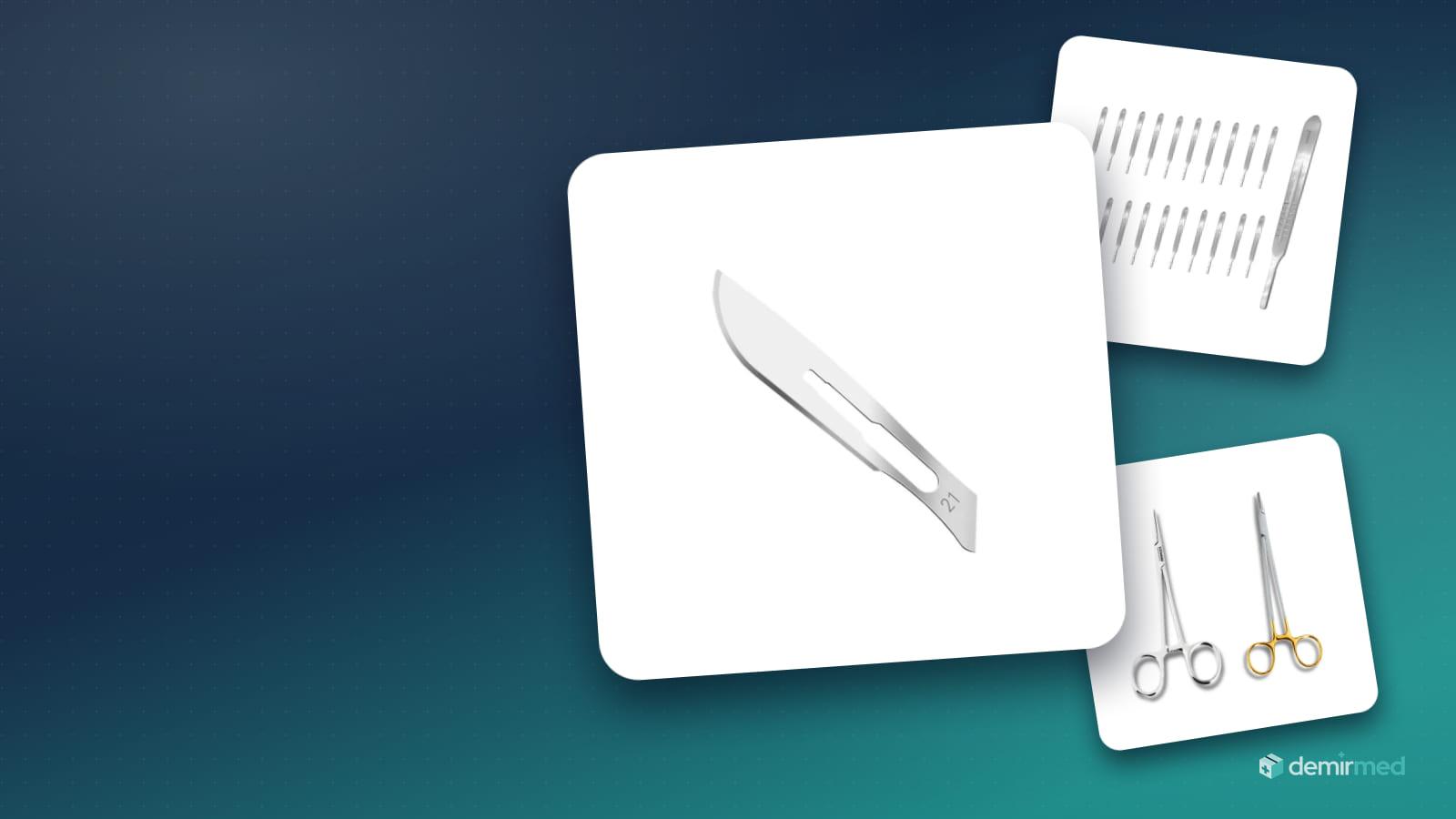
Blade numbers
The 10 series is small, the 20 series large
Scalpel handles: No 3 or No 4?
The boss at the tip of the handle slides into the slot in the middle of the blade. The two handle numbers have bosses of different widths, which is why not every blade fits every handle.
| Handle | Blades that fit | Where it is used |
|---|---|---|
| No 3 | 10, 11, 15 (the 10 series) | Outpatient work, minor surgery, aesthetic and precise incisions |
| No 4 | 20–24 (the 20 series) | Operating theatre, wide and thick tissue incisions |
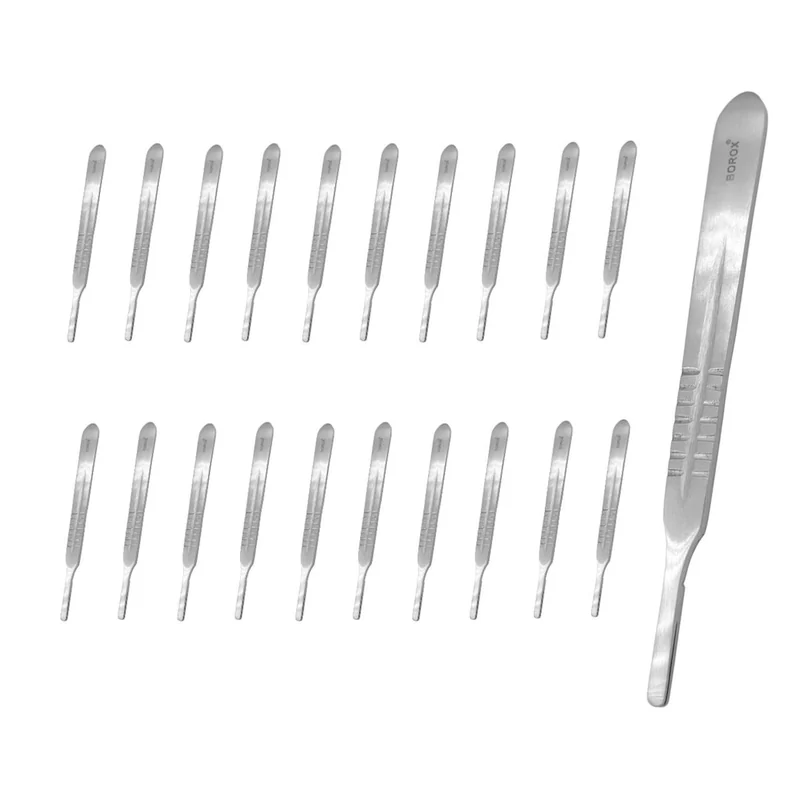
The Scalpel Handle in the catalogue is stainless steel and autoclavable; it is sold per piece as No 3 or No 4, without a blade. Long handles (for deep fields) and slim, pen-type handles are made too; they are separate lines to be stated in the request. Count handles with the sterilisation cycle in mind: while one handle is in the autoclave, a second should be on the tray.
Disposable scalpels with a handle
There are also single-use scalpels with a plastic handle and the blade already fitted, supplied sterile. With no fitting or removing step the risk of injury is lower; after the procedure the whole scalpel goes into the sharps container. They suit outpatient rooms with many short procedures and work away from the clinic. A stainless steel handle with separate blades remains the standard in the operating theatre for its weight and balance. Both are described by the same blade numbers; state "with handle, single-use" in the quote request if that is what you need.
How is a scalpel held?
The grip depends on the length of the incision and is a matter of surgical training; it is summarised here only as far as it affects the choice of blade. For short, precise incisions the scalpel is held like a pencil; blades 11 and 15 are used this way. For long incisions the handle lies in the palm with the index finger on top; No. 10 and the 20 series are made for this grip. Long handles allow the same blades to be used in deep fields. Which grip and blade are used is the physician's decision.
Carbon steel or stainless steel?
Single-use scalpel blades are made of two materials.
- Carbon steel: takes a very fine edge and gives a sharp first cut. It is sensitive to moisture, so every blade comes in its own sealed sterile pack, opened only at the moment of use. The scalpel blade in the catalogue is carbon steel.
- Stainless steel: resists corrosion; it may be preferred in wet fields and long procedures.
The handle is stainless steel in either case, because it has to withstand washing and autoclave cycles. The choice of blade material depends on the institution's protocol and the physician's habit.
How is a scalpel blade fitted and removed?
Most scalpel injuries happen not while cutting but while fitting and removing the blade. The basic rule: the blade is held with an instrument, never with the fingers.
- Open the sterile pack with the sharp side of the blade pointing away from you.
- Grip the blade by its back (blunt) edge with a needle holder; the cutting edge points down and away.
- Align the slot of the blade with the boss of the handle and slide it forward until it seats with a click.
- To remove it, lift the base of the blade slightly with the needle holder and slide the blade forward off the handle; the cutting edge again points away from you and your colleague.
- The removed blade goes straight into the sharps container; it is not left on the tray or the drape.
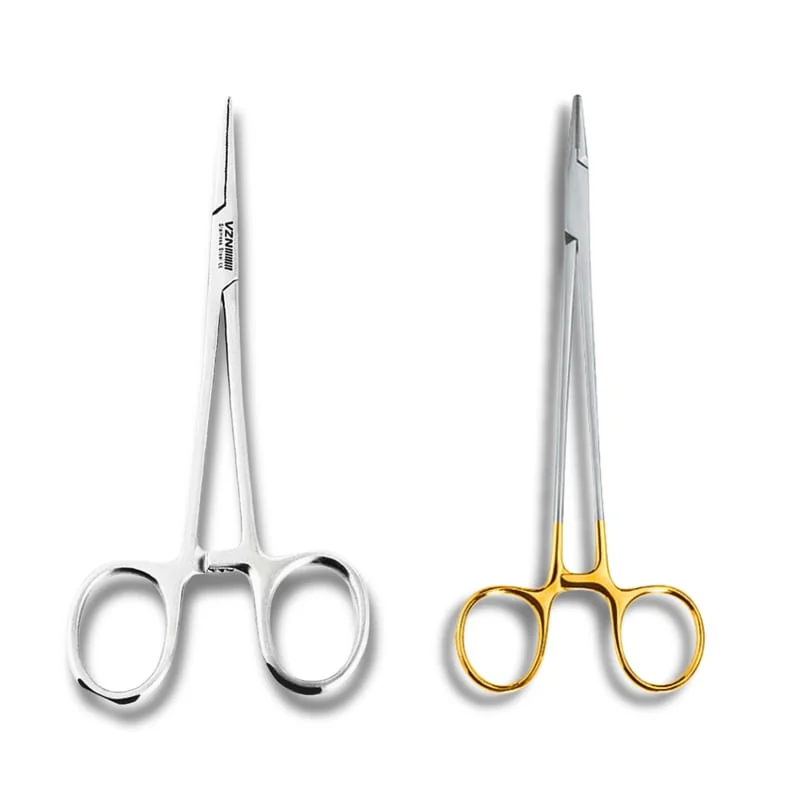
Sharps containers with a blade remover and single-use blade removers also exist; if your institution uses them, add them to the same request.
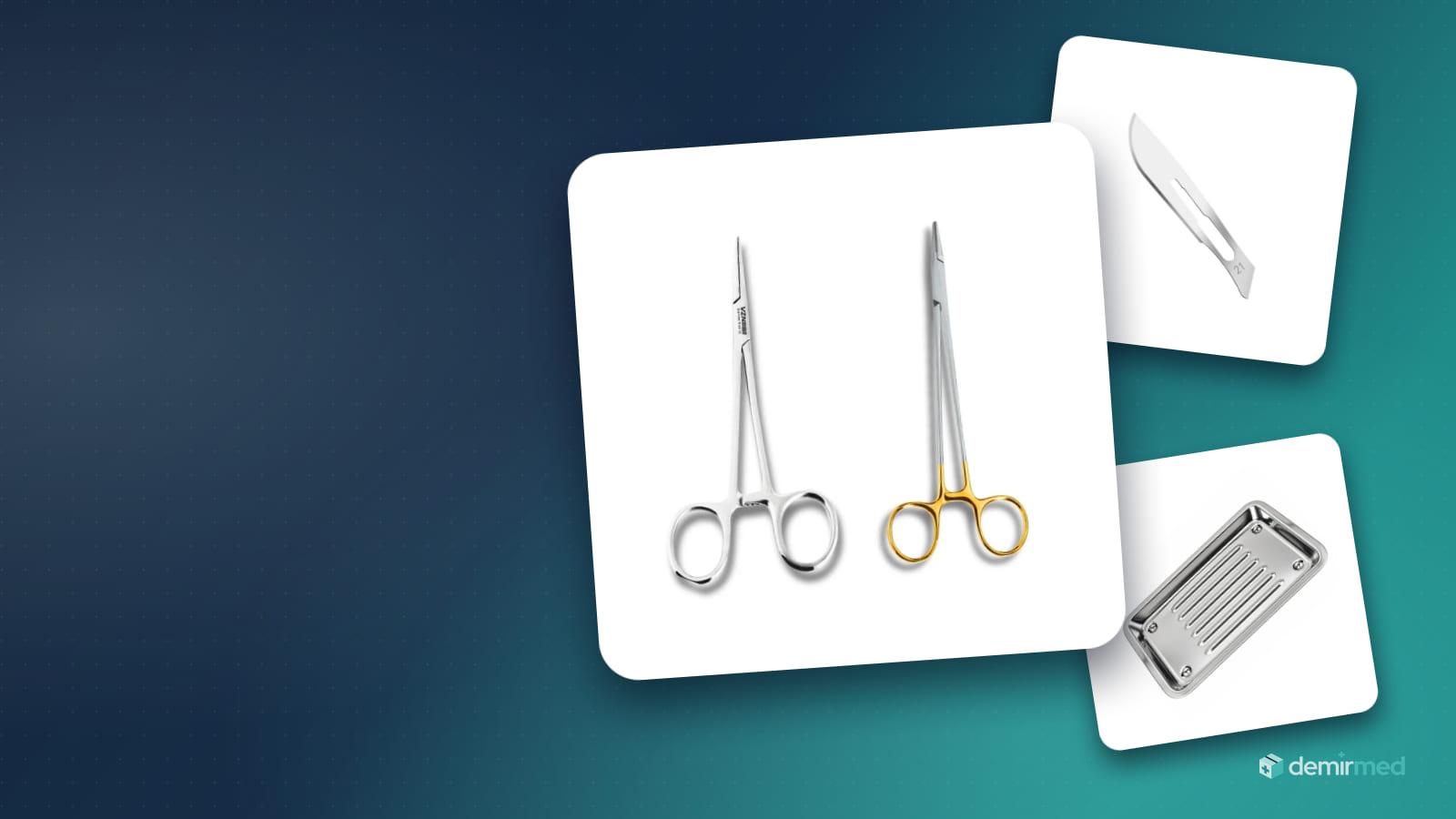
Fitting and removing
The blade is held with a needle holder, never by hand
Are a scalpel, a slit blade and a sapphire blade the same thing?
In hair transplant centres these three cutting tools are often confused; they do different jobs.
| Cutting tool | For | Handle | Where in the catalogue |
|---|---|---|---|
| Scalpel blade | Skin and tissue incisions | Scalpel handle No 3 / No 4 | Surgical consumables |
| Slit blade | Channel opening in hair transplantation | Blade handle | Slit - Permasharp (100 pcs) |
| Sapphire blade | Channel opening (sapphire FUE) | Sapphire blade holder | Sapphire blade size guide |
In FUE, grafts are extracted with a punch and channels are opened with a slit or sapphire blade; a scalpel is not the tool for either, and the handles are not interchangeable. All instruments used in hair transplantation are covered in instruments used in hair transplantation.
What sits next to the scalpel on a minor surgery tray?
A scalpel is not ordered on its own; the same tray holds the instruments and consumables that complete it. The list below is a general frame for minor surgery and outpatient procedures; the contents follow the physician's and the institution's protocol.
| Item | Job | Single-use? | Where in the catalogue |
|---|---|---|---|
| Scalpel handle and blade | Incision | Handle no, blade yes | Scalpel Handle, Scalpel Blade |
| Needle holder | Holding the suture needle, fitting and removing the blade | No, autoclaved | Needle Holder |
| Surgical scissors | Cutting sutures and tissue | No, autoclaved | Surgical Scissors |
| Absorbable suture | Closing the incision | Yes | Monocryl 4-0 |
| Sterile drape | Creating a sterile field | Yes | Surgical consumables |
| Instrument tray | Carrying and passing instruments | No, autoclaved | Stainless Steel Tray |
The suture number (3-0, 4-0, 5-0) gives the thickness of the thread and is chosen by the physician for the site of the incision.
Safe handling and sharps disposal
- A scalpel blade is single-use: one patient, one procedure. A blunted blade is replaced with a new one during the same procedure.
- A scalpel is not passed from hand to hand; it is transferred in a kidney dish or a stainless steel tray, through a neutral zone.
- A used blade is not put back into its sheath, bent or broken.
- The sharps container stands within reach of the working area and is closed and replaced when three quarters full.
- Do not use a blade whose pack is torn or wet, or which is past its expiry date.
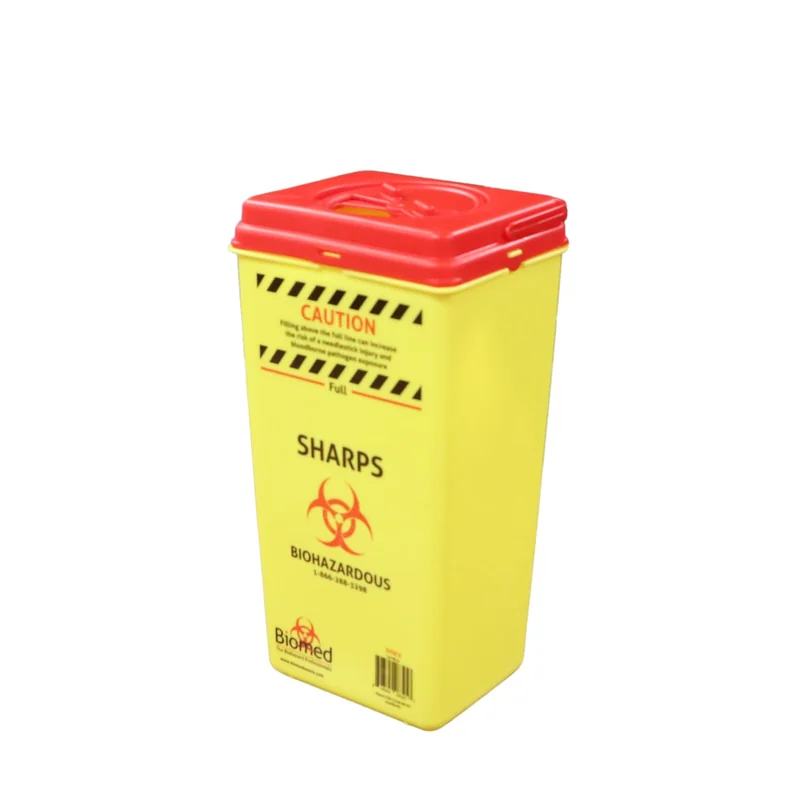
The Sharps Container 5 L in the catalogue has a puncture-resistant body and a one-way lid; it takes needles, scalpel blades, lancets and ampoules and is disposed of with its contents.
Safe handling
One patient, one blade; then the sharps container
Sterilisation and storage
The blade arrives sterile and is not re-sterilised. The handle is washed, dried and autoclaved after every use; the boss is brushed so that no tissue or blood residue stays on it. Carbon steel blades are stored dry and cool, in their box; if moisture damages the pack the blade darkens. Store on a first-in, first-out basis and record the lot number on the box. Shelving of sterile consumables is covered in the sterile medical consumables guide, instrument care in choosing surgical instruments.
Quantity planning: how many boxes of blades, how many handles?
| Item | Per procedure (example) | Pack | Note |
|---|---|---|---|
| Scalpel blade | 1–2 | Box of 100 | A blunted blade is replaced in long procedures |
| Scalpel handle | 1–2 per set | Piece | With a spare for the sterilisation cycle |
| Sharps container | — | Piece | Replaced at the fill line |
| Sterile surgical gloves | 1 pair per person | Pair | Sizes are written separately |
Example: a clinic doing 120 minor procedures a month and using 1.5 blades per procedure on average uses 180 blades a month; that is two boxes, and the weekly reserve stays within the box. Where two blade numbers are in use, count a separate box for each. The figures only show the method; replace them with your own count.
Common ordering mistakes
- Writing only "scalpel blade": without a number no quotation can be prepared; write 10, 11, 15 or 20–24.
- Not matching blade and handle: 20-series blades do not fit a No 3 handle, and 10-series blades do not fit a No 4.
- Forgetting the handle: a box of blades holds no handle; the handle is a separate line.
- Confusing a slit blade with a scalpel blade: the blade that opens channels in hair transplantation does not fit a scalpel handle.
- Leaving out the sharps container: every order of cutting consumables should come with one.
Purchasing checklist
- Which blade numbers are in use, and how many boxes of each a month?
- Does the handle number match the blades: No 3 for 10, 11, 15; No 4 for 20–24?
- How many handles does the sterilisation cycle require?
- Does the blade material (carbon or stainless steel) suit the institution's protocol?
- Are a needle holder, an instrument tray and a sharps container in the same request?
- Are sterile surgical glove sizes (6.5–8) and drapes on the list?
- Are the delivery address and any regular shipment wish stated in the quote request?
Products
Scalpel blades, the sharps container and sterile drapes are in the surgical consumables category; the scalpel handle, needle holder, surgical scissors and trays are in Surgical Instruments. For the full list of instrument names see surgical instrument names. Add products and quantities to your list and request a quote; writing the blade and handle numbers in the request is enough, and the quotation is sent as a PDF within 1 business day.