
How to use this list
Most surgical instruments are named after their designer (Kocher, Kelly, Metzenbaum) and come in several lengths, curvatures and tip types. Purchase lists should therefore state length in cm, straight or curved, toothed or plain, and tungsten carbide (TC) where relevant. The list below groups instruments by function; descriptions are general information and clinical technique remains the surgeon's responsibility.
Cutting instruments
- Scalpel handle No. 3: carries small blades No. 10, 11, 12, 15 for skin and fine tissue incisions. Scalpel handles
- Scalpel handle No. 4: carries large blades No. 20–24 for deep, wide incisions.
- Scalpel handle No. 7: slim, long handle for deep or narrow fields with No. 3 blades.
- Scalpel blade (single use): sterile carbon or stainless steel; No. 10 general incision, No. 11 stab incision, No. 15 short precise cuts. Scalpel blades
- Iris scissors: 9–11.5 cm, fine pointed tips; ophthalmology, plastic surgery and fine dissection.
- Mayo scissors: straight or curved, blunt, robust; fascia and heavy tissue, the straight model often cuts sutures.
- Metzenbaum scissors: long handles, slim blades; soft tissue cutting and dissection, 14–23 cm.
- Suture removal scissors: hooked lower blade lifts and cuts the thread without touching skin.
- Lister bandage scissors: blunt angled tip protects skin when cutting dressings.
See all Scissors.
Grasping instruments (forceps)
- Adson forceps: 12 cm, fine tips, toothed (1x2) or plain; skin and subcutaneous tissue. Forceps
- Adson-Brown forceps: multiple fine teeth hold skin without crushing.
- Allis forceps: ratcheted, toothed jaws; fascia and tissue to be excised.
- Anatomical (dressing) forceps: plain serrated tips for atraumatic handling.
- Babcock forceps: ratcheted, rounded fenestrated jaws; bowel and tubular structures.
- Bayonet forceps: offset shaft keeps the view clear in nasal and ear canals.
- Surgical (tissue) forceps: 1x2 teeth; fixing skin and firm tissue.
- DeBakey forceps: fine atraumatic serrations; vascular surgery.
- Jeweler forceps: 10–11 cm, very fine points, straight or curved; microsurgery, grafts, suture handling.
- Russian forceps: broad rounded toothed tips for thick tissue.
- Splinter forceps: fine pointed tips for foreign body removal.
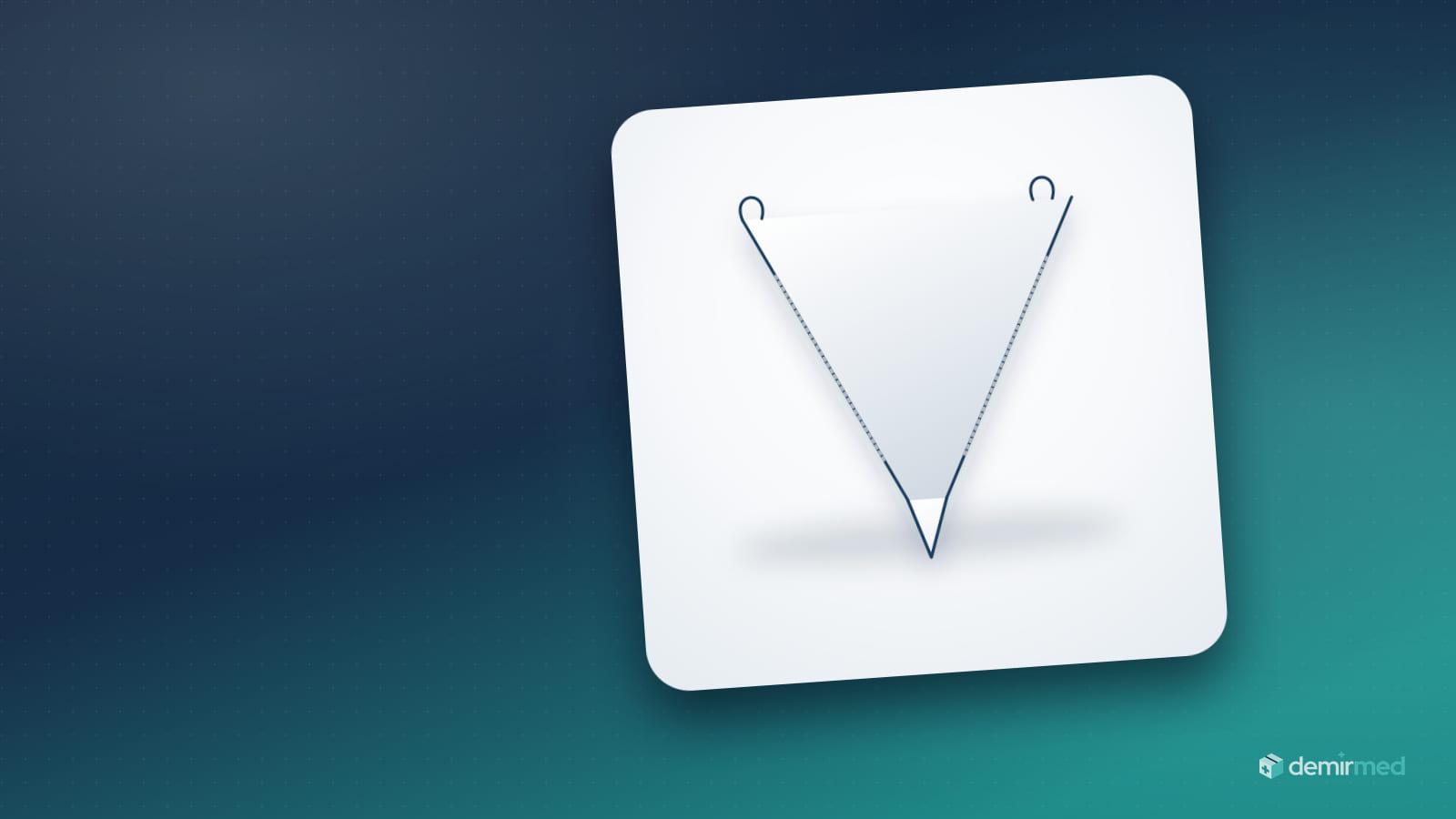
Grasping instruments
Forceps: Adson, jeweler, toothed
Haemostatic clamps
- Crile: 14–16 cm, fully serrated jaws; medium vessels. Surgical instruments
- Halsted mosquito: 12.5 cm, very fine tips; small vessels and capillary bleeding.
- Kelly: 14 cm, serrations on the distal half only; the most common haemostat.
- Kocher: 1x2 teeth at the tip; fascia and thick tissue, not for vessels.
- Mixter (right angle): angled tip passes behind vessels and ducts.
- Pean: long, heavy, fully serrated; large vessels and tissue masses.
- Rochester-Carmalt: longitudinal serrations; vascular pedicles.
- Satinsky: angled atraumatic jaws; partial vascular occlusion.
Suturing instruments (needle holders)
- Castroviejo: 14–18 cm, spring and lock; 6-0 and finer sutures in microsurgery and ophthalmology. Surgical instruments
- Crile-Wood: 15–18 cm, slim jaws; 3-0 to 5-0 sutures.
- Derf: 12 cm, short and fine; skin closure in small fields.
- Mathieu: spring handle without rings, opens and closes with one hand.
- Mayo-Hegar: 15–20 cm, wide jaws; 2-0 and heavier sutures, the general surgery standard.
- Olsen-Hegar: scissors built behind the jaws for suturing and cutting with one instrument.
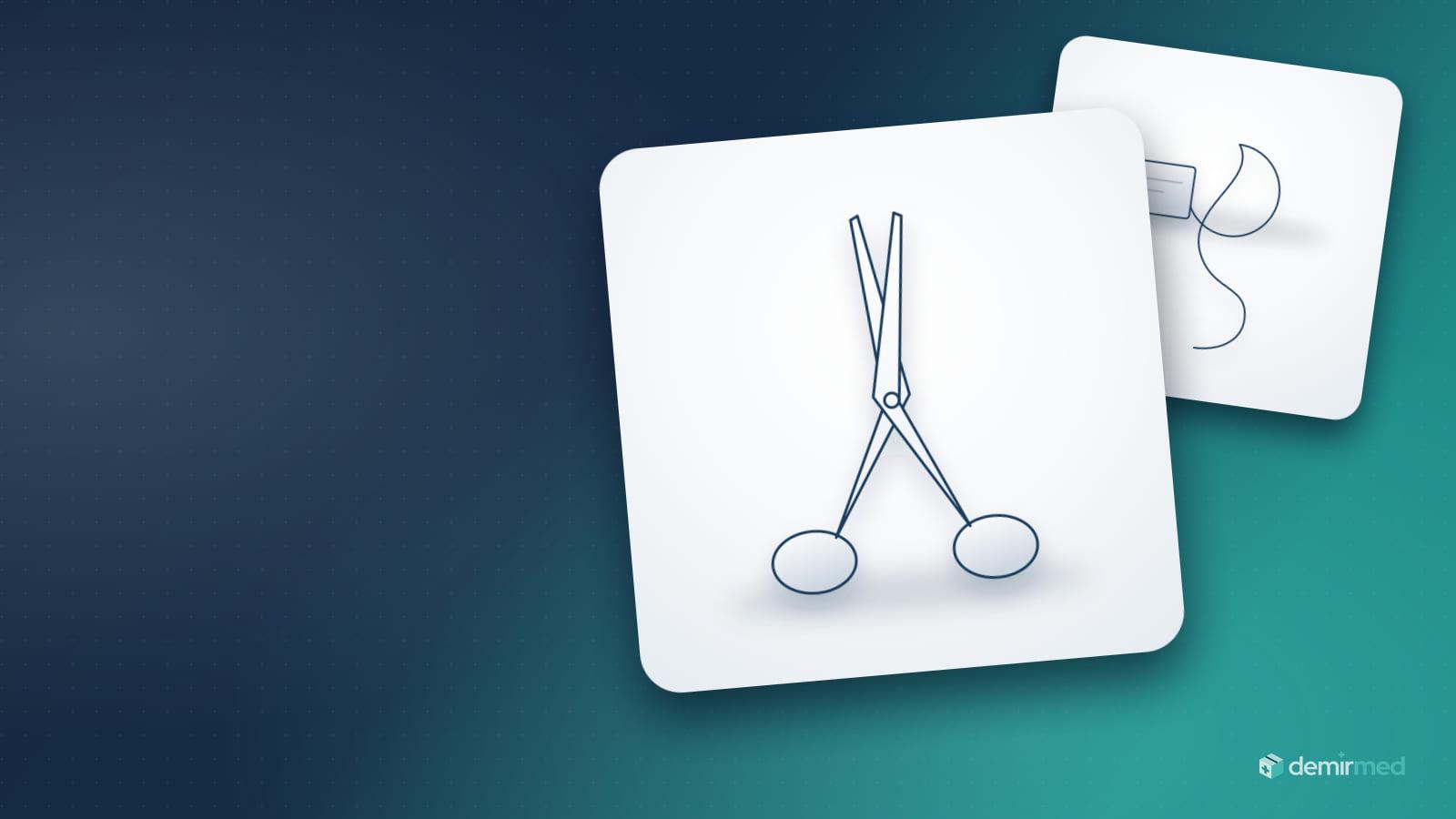
Suturing
Needle holders and suturing instruments
Retractors
- Army-Navy: double-ended handheld; superficial wound edges.
- Deaver: wide curved blade; abdominal organs.
- Farabeuf: double-ended L profile, used in pairs; small and medium incisions.
- Langenbeck: narrow L-shaped blade; deep narrow fields.
- Richardson: wide rounded blade; abdominal wall and deep wounds.
- Senn: rake on one end, flat blade on the other; plastic and hand surgery.
- Volkmann: 2–6 prong rake for superficial tissue.
- Weitlaner: self-retaining, ratcheted, toothed; superficial and medium-depth incisions.
- Gelpi: self-retaining single sharp points; orthopaedics and narrow fields.
Other instruments
- Yankauer suction tip: removes fluid and blood from the field; sterile single-use versions are common.
- Frazier suction tip: fine cannula for ENT, neurosurgery and small fields.
- Backhaus towel clamp: sharp ratcheted points fix drapes to each other and to skin.
- Foerster sponge (ring) forceps: ring jaws for sponges, antisepsis and tissue.
- Bone cutter and rongeur (Liston, Luer): bone cutting and nibbling.
- Volkmann bone curette: spoon tip for scraping bone and soft tissue.
- Sharp curette: cavity cleaning and tissue sampling.
- Probe: blunt rod for tracking fistulas and measuring depth.
- Raspatory (periosteal elevator): separates periosteum from bone.
- Speculum: vaginal (Cusco, Graves), nasal (Killian) and ear specula.
- Skin hook: single sharp hook lifts skin edges atraumatically.
- Instrument tray and container: perforated containers for sterilisation and transport.
Basic surgical set (example)
| Instrument | Qty | Note |
|---|---|---|
| Scalpel handles No. 3 and No. 4 | 1 + 1 | Sterile single-use blades |
| Mayo scissors straight and curved | 1 + 1 | 17 cm |
| Metzenbaum scissors curved | 1 | 18 cm |
| Surgical and anatomical forceps | 2 + 2 | 14–16 cm |
| Adson forceps toothed | 2 | 12 cm |
| Mosquito clamps curved | 6 | 12.5 cm |
| Kelly clamps curved | 4 | 14 cm |
| Kocher clamps straight | 4 | 14 cm |
| Allis clamps | 4 | 15 cm |
| Babcock clamps | 2 | 16 cm |
| Mayo-Hegar needle holders | 2 | 18 cm |
| Crile-Wood needle holder | 1 | 15 cm |
| Farabeuf retractors | 1 pair | |
| Weitlaner retractor | 1 | Self-retaining |
| Backhaus towel clamps | 6 | 11 cm |
| Foerster sponge forceps | 2 | 24 cm |
| Yankauer suction tip | 1 | |
| Instrument tray | 1 |
Minor surgery set (example)
Scalpel handle No. 3, Iris scissors, Metzenbaum 14 cm, Adson forceps toothed and plain, curved mosquito clamps (2), Kelly clamp (1), Crile-Wood or Derf needle holder, Senn retractors (pair), Backhaus towel clamps (2), ring forceps (1), small tray. Jeweler and placing forceps used in hair transplant clinics are listed in the hair transplant instruments guide.
Material and care notes
- Stainless steel grades. Martensitic steels (AISI 420 and 410 class) give hardness and edge retention; austenitic 304 is used for trays, containers and holding instruments.
- Tungsten carbide inserts. TC jaws and blades, marked by gold-coloured rings, extend wear life considerably and should be the first choice for heavily used sets.
- Autoclave. Instruments tolerate 134 °C steam sterilisation. Rinse immediately after use, clean with enzymatic detergent, lubricate joints and package in the open position. See Sterilisation for pouches and indicators.
- Inspection. Check blade closure, jaw alignment and ratchet steps every cycle and remove faulty instruments from the set.
Purchasing note
Surgical instruments and sets are priced by quotation. State instrument name, length, straight or curved, toothed or plain and TC preference in your request for an exact match. Browse all Surgical Instruments and read the surgical instrument selection guide.