Short answer
A derma roller is a personal care tool with hundreds of fine needles on a cylindrical head, used by rolling it over the skin or scalp. The method is called microneedling: the needles open very small, superficial channels in the top layer of the skin. A derma roller is used as part of skin and scalp care routines; it is not a treatment on its own and does not remove the cause of hair loss. Assessing and treating hair loss is a matter for the physician.
Safe use rests on three rules: the tool is personal and is not shared, it is cleaned and disinfected before and after every use, and it is not used on irritated or broken skin. Needle length and frequency of use follow the advice of the physician or clinic. The Demir Med catalogue lists the 540-needle Estebien Derma Roller; it is sold on its own and inside the Estebien 6 Month Hair Care Kit, by quotation.
What is a derma roller?
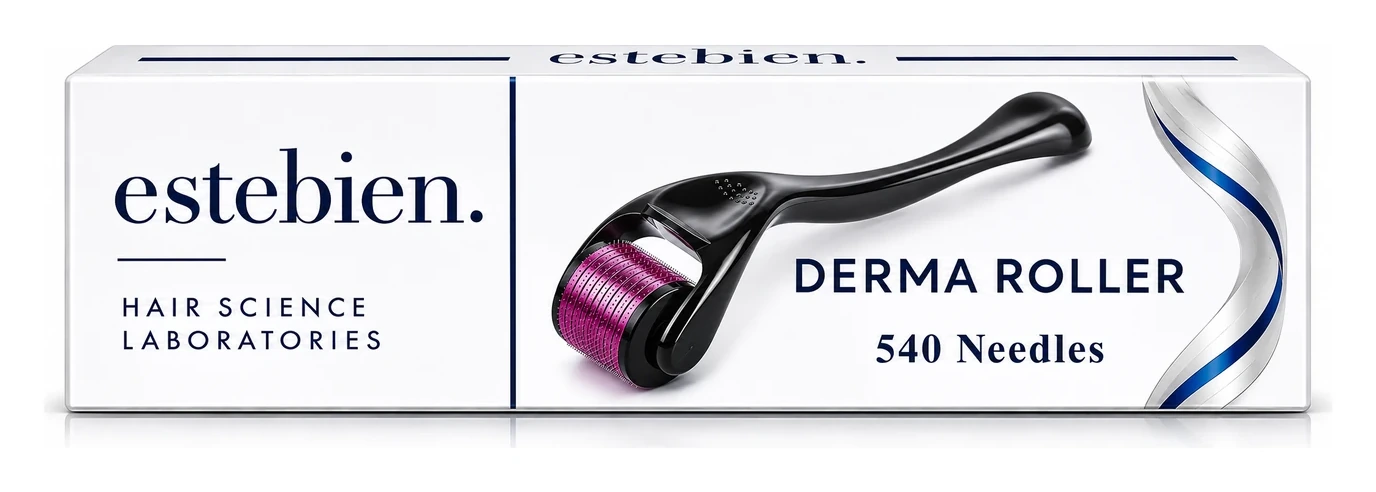
A derma roller has three parts: the handle you hold, the roller head that turns freely at the end of the handle, and the needles set in rows on the head. As the head rolls back and forth over the skin, the needles go in and out. It is also written "dermaroller"; both spellings mean the same tool.
| Part | What it does | What to check |
|---|---|---|
| Handle | Lets you hold the tool and control the angle | It must not slip in the hand and must be firmly joined to the head |
| Roller head | Carries the needles and turns over the skin | It must turn freely without catching |
| Needles | Open superficial micro-channels in the top layer of the skin | No bent, broken or blunt needles |
| Protective case | Protects the needles from knocks and dirt | The tool is stored in its case once it is dry |
A derma roller is a consumable: the needles become blunt with use. A blunt or bent needle scratches the skin instead of piercing it, so the tool is not used indefinitely.
What does a derma roller do?
The honest answer to what a derma roller does is this: it is a microneedling tool and is used for that purpose in a skin or scalp care routine. What can be expected depends on the needle length, the frequency of use, the condition of the skin and the person. This guide promises no effect or result; whether to use a derma roller for a skin or hair concern is the physician's decision.
Clinics mostly position the derma roller as part of the care kit given to the patient: a tool whose instructions come from the clinic, next to cosmetic products such as shampoo, serum and care oil. The directions of the product in our catalogue follow the same line: it is rolled lightly over a clean, dry scalp without pressing, and the advice of the physician or hair clinic decides how often it is used.
Derma roller needle lengths: how many mm?
Which needle length is the most common question. The needle length is printed on the packaging in millimetres and determines where the tool is used and by whom. The general classification on the market is as follows:
| Needle length | General place of use | Who applies it |
|---|---|---|
| 0.2–0.3 mm | Superficial cosmetic care | Personal use |
| 0.5 mm | A length often named for skin and scalp care | Personal use; the physician or clinic sets the frequency |
| 1.0 mm and above | Deeper microneedling | In a clinic, by a physician or a trained practitioner |
This table is not advice but the general distinction on the market. The longer the needle, the deeper the application, the longer the wait between applications and the heavier the consequence of a hygiene mistake. Long-needle tools are not recommended for home use. Which length suits whom is decided by the physician.
The product information of the Estebien Derma Roller in our catalogue states the number of needles (540); you can ask for the needle length on the packaging in your quotation request.
192 needles or 540 needles?
The needle count is the total number of needles on the head. Two numbers are most common on the market:
| Needle count | Head structure | What it means in practice |
|---|---|---|
| 192 needles | Sparser arrangement | Fewer contact points over the same area |
| 540 needles | Denser arrangement | More contact points over the same area; pressure is spread more evenly across the needles |
The needle count is not a measure of quality on its own; the straightness of the needles, their material and how the head turns matter at least as much. The needle material (stainless steel or titanium) and the form of packaging are stated on the product label.
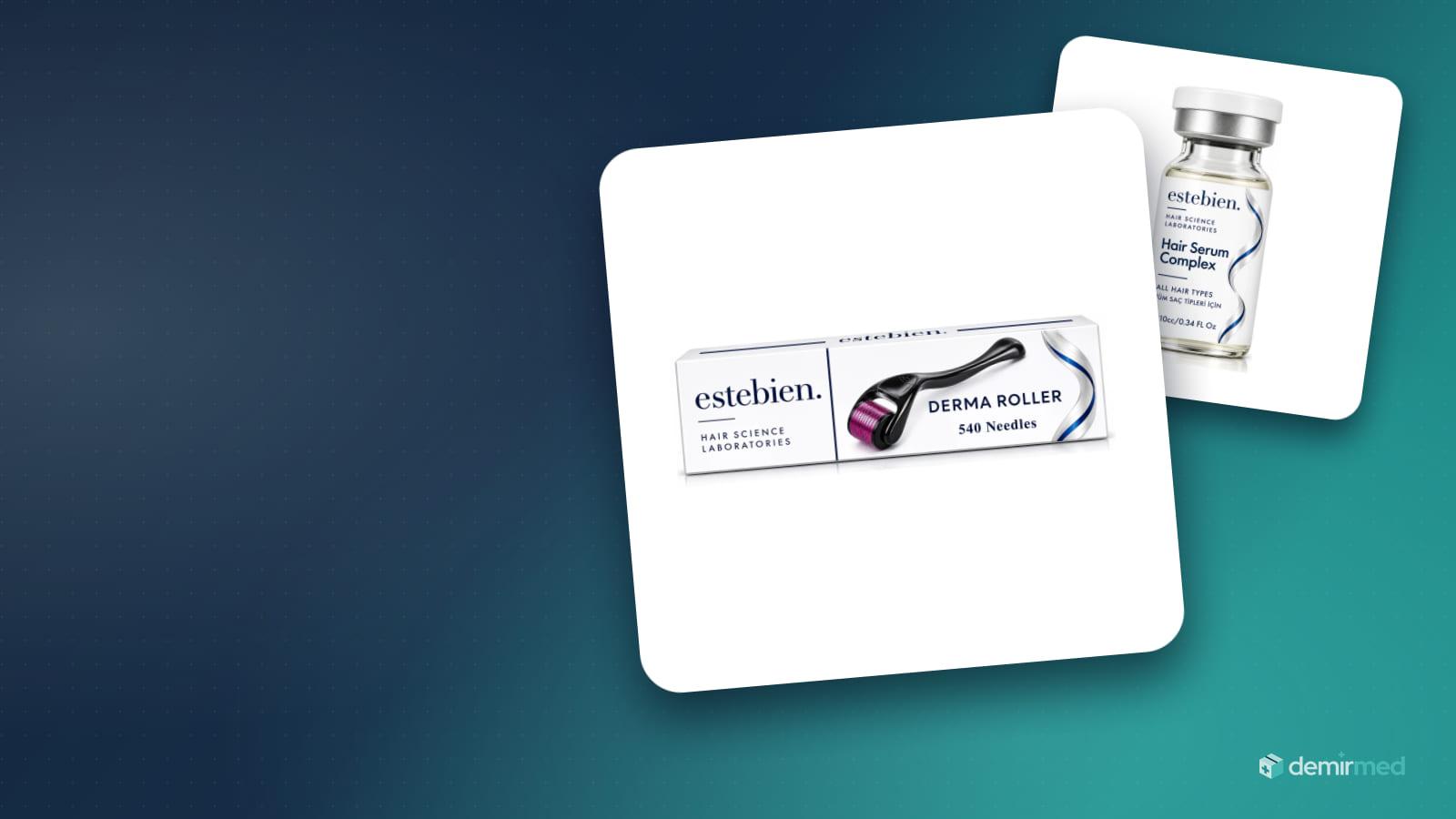
Needle length and needle count
How many mm? 192 or 540?
Derma roller, derma pen and derma stamp
All three tools perform microneedling; the difference lies in how the needle enters the skin.
| Tool | How it works | Typical use |
|---|---|---|
| Derma roller | A needled cylinder is rolled over the skin | Personal care; wide, flat areas |
| Derma stamp | A flat head is pressed straight onto the skin | Small areas, areas with hair |
| Derma pen | A motorised pen; needles go straight in and out quickly and the depth is adjustable | Clinical use, by a physician or a trained practitioner |
With a derma roller the needles enter and leave the skin at a slight angle, which is why it is used with a light movement and no pressure. On the scalp, long hair can wind around the cylinder: the hair is parted along the line of application and the cylinder is moved in short strokes.
How to use a derma roller on the scalp, step by step
The answer to how to use a derma roller is the manufacturer's instructions and the clinic's advice. The steps below follow the directions of the product in our catalogue and general hygiene rules. The most common mistake when a derma roller is used on the scalp is pressing too hard.
- Check the tool: Do not use it if the needles are bent, broken or rusty.
- Disinfect the tool: Clean the head with a disinfectant that suits the manufacturer's instructions (commonly 70% alcohol) and let it dry.
- Prepare the scalp: The scalp must be clean and dry. Part the hair in lines over the area.
- Roll lightly: Move the cylinder in short strokes without pressing. A few passes along the same line are enough; pressing hard enough to scratch the skin or insisting on one spot is not the aim.
- Change direction: Going over the area horizontally, vertically and diagonally evens out the coverage. Lift the cylinder off the skin when you change direction; do not turn it on the skin.
- Clean the tool again: After use, clean and disinfect the head once more.
- Dry it and store it in its case: A tool stored wet grows bacteria; needles left exposed get bent.
Which product is applied to the scalp afterwards, and when, depends on the clinic's instructions. Right after microneedling the skin is more sensitive to what is applied; scented, alcohol-based or irritating products are avoided.
Derma roller on the beard area
A derma roller on the beard area follows the same rules: clean, dry skin, a light movement and disinfection at every use. The skin of the beard area is thinner than the scalp and may be irritated after shaving; it is not used on irritated, cut or spotty skin.
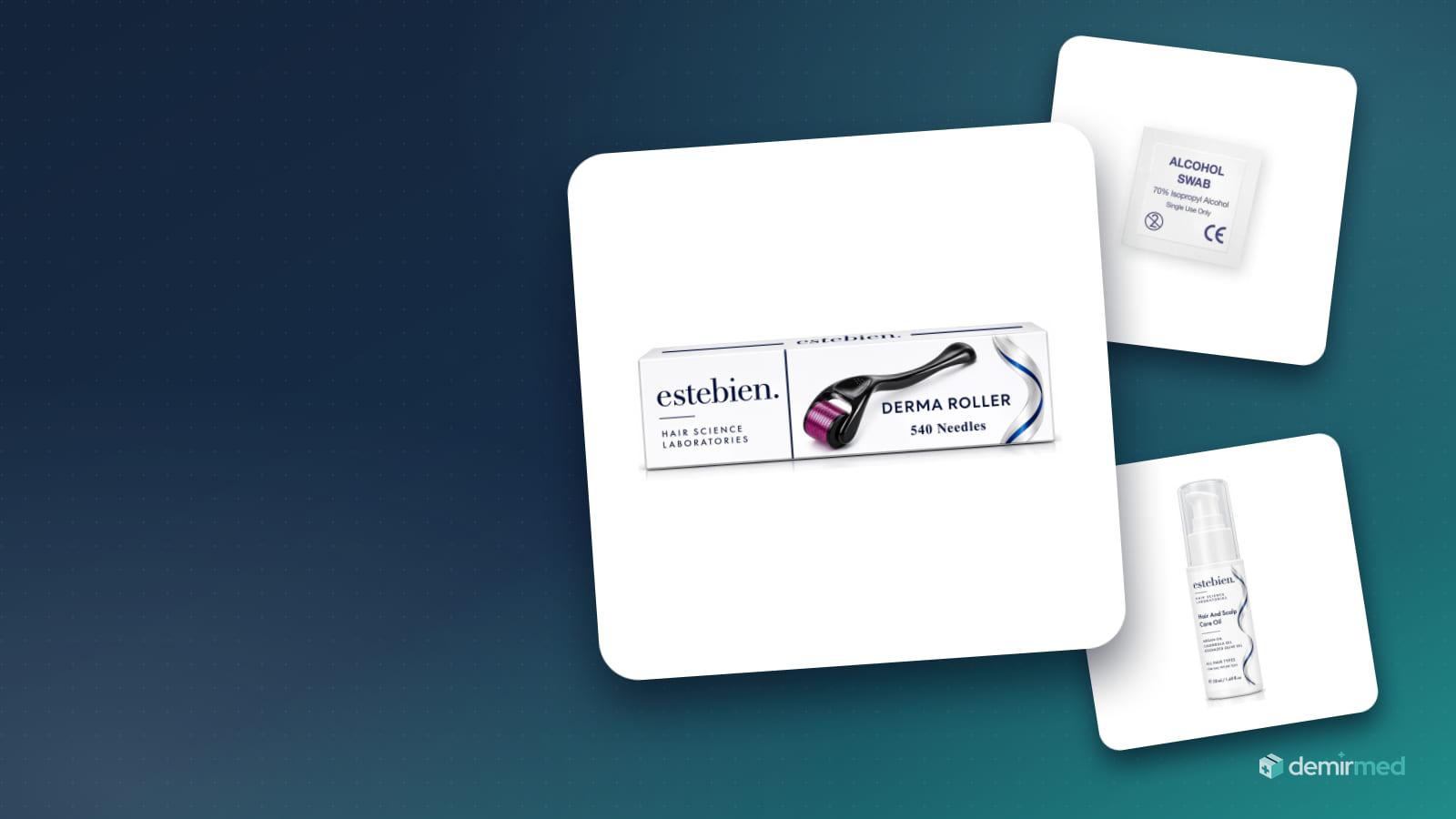
Steps of use
Disinfect · roll lightly · clean · store
Aftercare and first use
For a first-time user the safest start is a trial on a small area with the lightest pressure, done the way the physician or clinic describes. The area is not widened and the frequency is not raised before the skin's reaction has been seen.
In the first hours after use the scalp is sensitive. In general, the following are observed in this time:
- The scalp is not touched with unwashed hands and the area is not scratched.
- Sun, sauna, swimming pools and exercise that causes heavy sweating are avoided.
- Hair dye, perms and similar chemical processes are not planned for the same day.
- Anything that touches the area, such as a hat or cap, must be clean.
- The same area is not treated again before the skin has fully settled.
How long to wait between applications depends on the needle length and the condition of the skin; the physician or clinic sets that interval. The idea that "more often is better" is wrong: using the tool again before the skin has had time to recover increases irritation.
Common mistakes when using a derma roller
- Pressing too hard: The tool is moved with a pressure close to its own weight; pressing makes the needles scratch the skin.
- Skipping disinfection: Rinsing with water is not disinfection. The tool is disinfected before and after every use.
- Sharing the tool: It is not shared, even within a family.
- Using it on irritated skin: A red, itchy, broken or spotty area is left out.
- Carrying on with blunt needles: A tool with bent or blunt needles is replaced.
- Storing it wet: The tool does not go into its case before it is dry.
- Moving to longer needles on your own: Changing to a longer needle is the physician's decision; long-needle tools are for the clinic.
- Using it too soon after a procedure: After a hair transplant or another procedure it is not used without the physician's permission.
Cleaning, storage and replacement
| Topic | Correct practice | Common mistake |
|---|---|---|
| Before use | Disinfect the head and let it dry | Only rinsing the tool with water |
| After use | Clean off residue and disinfect again | Putting the tool into its case wet |
| Storage | Dry, in its own case | In the open in the bathroom, with the needles touching a surface |
| Sharing | The tool belongs to one person | Shared use within a family |
| Replacement | After the number of uses the manufacturer recommends, or when the needles turn blunt | Carrying on with bent needles |
Not sharing a derma roller is a rule, not a preference: because the needles enter the skin, the tool comes into contact with blood and tissue fluid. A tool given to one patient in a clinic is not used on another. For cleaning the skin before use, single-use products such as the alcohol swab in our catalogue are in the Disinfection and Hygiene category.
Who should not use a derma roller?
In the following cases a derma roller is not used, or a physician is consulted first:
- Irritated, broken or infected skin.
- Active spots, cold sores, eczema or a psoriasis flare in the area.
- People with bleeding or wound-healing problems and those under continuous treatment.
- Pregnancy and breastfeeding.
- The healing period after a hair transplant or another procedure.
- Children: the tool is for personal use by adults.
Short-lived redness after use is expected. If redness lasts, or swelling, pain or discharge appears, use is stopped and a physician is consulted.
Derma roller after a hair transplant
After a hair transplant the recipient and donor areas are healing for weeks. Applying a needled tool to the area in this period can damage the grafts and the healing tissue. For that reason only the physician who performed the procedure permits the use of a derma roller after a hair transplant; the physician also says when to start and on which area. The warning on the product in our catalogue says the same: consult your doctor before use after a hair transplant or any other procedure.
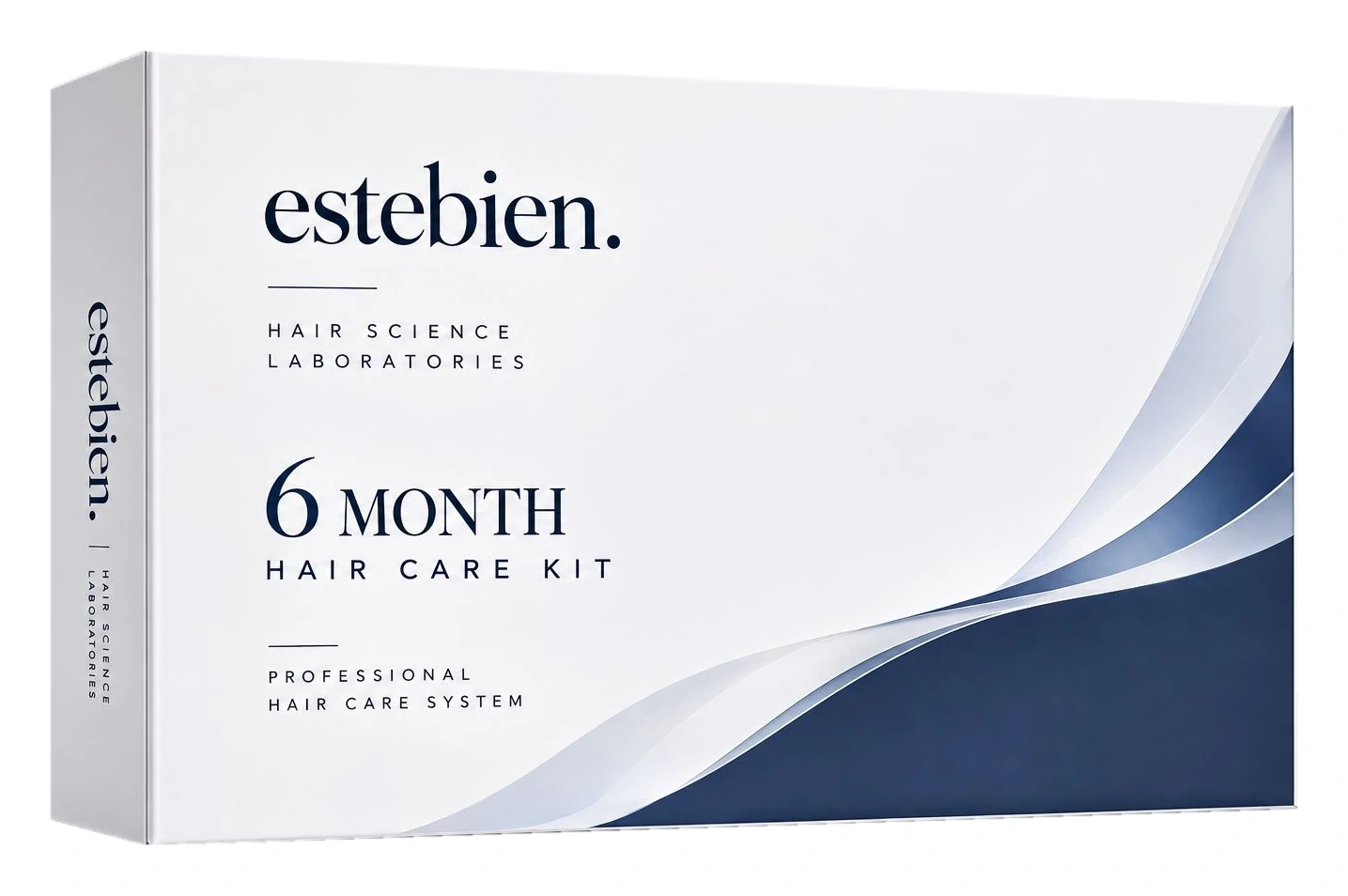
In the care programme clinics give their patients, the derma roller usually comes last: washing and repair products first, then, once healing is complete, the other steps the physician considers suitable. For the order of care products after a transplant see the guide to care products after a hair transplant, and for grafts and healing the guide to what a graft is.
How do clinics hand a derma roller to the patient?
Hair transplant centres and dermatology clinics usually hand the derma roller to the patient as part of a care programme. Arrangements that work well have these points in common:
- Each patient receives a separate tool in a closed box. A tool that has been opened or tried in the clinic is not given to another patient.
- The instructions are written. When to start, which area to treat, the frequency and the cleaning steps are given to the patient in writing; a spoken description is forgotten.
- The start date is the physician's. For a hair transplant patient, when to start using the tool is decided at the follow-up examination.
- The kit and the single product are planned separately. The six-month care kit contains one derma roller; if the needles turn blunt or the patient loses the tool, a new one is given as a single product.
- Stock follows the number of patients. Because the tool is personal, every new patient means one piece; the monthly number of procedures sets the order quantity.
This arrangement keeps the hygiene rule and also prevents the patient from using the product at the wrong time or in the wrong way.
Buying checklist for clinics
- Is the needle count stated on the packaging? The product in our catalogue has 540 needles.
- Is the needle length (mm) clearly stated on the packaging? The physician decides the length given to the patient.
- Are the needle material and the form of packaging stated on the label?
- Does the tool come with its protective case?
- Are the directions and warnings in the patient's language?
- Will the product be given to one patient only? The tool is personal and is not shared.
- Have you asked for the product documents? CE and ÜTS registration details are shared once verified.
- Will the derma roller be given on its own or with a care kit?
- Does the patient receive written cleaning and disinfection instructions?
- Was the order quantity planned from the monthly number of patients?
Derma rollers and hair care products from Demir Med
Demir Med supplies hair transplant centres and clinics with Estebien products for their patient care programmes by quotation: the Estebien Derma Roller 540 Needles, the Estebien 6 Month Hair Care Kit, the Hair Serum Complex, the Hair and Scalp Care Oil and the strengthening shampoo are in the Hair Care and Cosmetics category. For the mesotherapy products used in the clinic see the guide to hair mesotherapy supplies. Prices are not published on the site. Send your list through the quotation page; a written quotation is sent within 1 business day.