
Short answer
A laryngoscope is an illuminated medical device that lifts the tongue and epiglottis during endotracheal intubation so the larynx and vocal cords come into view. It consists of a battery handle and an interchangeable blade. The most common blades are the curved Macintosh (usually size 3 or 4 in adults) and the straight Miller. Light comes from a bulb on the blade or, via fibre optics, from the handle.
What is a laryngoscope and what are its parts?
The laryngoscope is basic airway equipment for anaesthesia, emergency, intensive care and ambulance teams. A laryngoscope set consists of at least one handle and blades in several sizes; the light and power system is built into these two parts.
| Part | Function | What to check when buying |
|---|---|---|
| Handle | Holds the batteries and provides the grip | Size (standard, slim, short), battery type, voltage |
| Blade | Lifts the tongue and epiglottis to open the view | Type, size, single-use or reusable |
| Light source | Illuminates the airway | On the blade or in the handle; LED, halogen or xenon |
| Power source | Powers the light | AA or C batteries, rechargeable cell |
| Hook-on fitting | Locks the blade to the handle and switches the light on | ISO 7376 conformity |
Handle and laryngoscope batteries
The handle is a knurled body with a battery compartment inside. Standard (adult) handles mostly take two C cells and slim handles two AA cells; rechargeable handles use a NiMH or lithium-ion cell and a separate charger. A short (stubby) handle is preferred in patients with a large chest or obesity, where a standard handle catches on the chest. Battery systems generally use 2.5 V bulbs and rechargeable systems 3.5 V bulbs; if voltages do not match, the light stays dim or the bulb burns out early.
What is a blade?
The blade is the part of the laryngoscope that enters the mouth and lifts the tongue and epiglottis (Turkish purchase lists often spell it “bleyd”). Its sections are the heel (base) that fits the handle, the spatula that displaces the tongue, the flange (side wall) that keeps the tongue aside, and the tip. Reusable blades are usually stainless steel; single-use blades are metal or plastic.
Light source and hook-on fitting
In a conventional system the bulb is screwed into a socket on the blade near the tip; in a fibre-optic system the light source sits at the top of the handle and the light travels to the tip through a fibre bundle in the blade. The slot in the blade heel hooks onto the hinge pin of the handle; when the blade is opened to its working position at a right angle and clicks into place, the circuit closes and the light comes on. The fitting dimensions are defined in ISO 7376.
Conventional versus fibre-optic laryngoscopes
Laryngoscope types are divided by lighting system into conventional and fibre-optic, and by viewing method into direct and video laryngoscopes. In a conventional laryngoscope the bulb sits on the blade and receives power through a metal contact between handle and blade. In a fibre-optic laryngoscope the bulb or LED is at the top of the handle; the blade has no electrical parts and the light reaches the tip through a fibre bundle.
| Feature | Conventional (bulb on blade) | Fibre-optic |
|---|---|---|
| Location of light source | Bulb on the blade near the tip | Top of the handle; light carried by the fibre bundle in the blade |
| Electrical contact | Metal contact between handle and blade | No electrical parts in the blade |
| Light | Depends on bulb type; yellowish with classic bulbs | Brighter and more focused; white light with LED |
| Reprocessing | Bulb and contact socket can trap soil | Usually better suited to sterilisation as there are no electrical parts |
| Common faults | Loose or blown bulb, oxidised contact | Broken fibres, scratched light window, handle bulb |
| Identification | Usually none | Green ring or marking on ISO 7376 conforming systems |
| Compatibility | Conventional handles only | Fibre-optic handles only |
What is the green system (ISO 7376)?
ISO 7376 is the international standard that defines the dimensions of the hook-on handle-blade fitting for tracheal intubation laryngoscopes and the compatibility of fibre-optic illuminated parts. Fibre-optic handles and blades that conform to it usually carry a green ring or green colour marking and are known on the market as the “green system”. Before combining parts from different manufacturers, check that both are marked and that the light reaches the tip fully. A conventional blade gives no light at the tip on a fibre-optic handle, and a fibre-optic blade gives none on a conventional handle, so the two systems must not be mixed.
LED, halogen or xenon?
- Halogen: yellowish light, limited bulb life; spare bulbs needed.
- Xenon (xenon-halogen): whiter and brighter light than halogen.
- LED: white light, low energy use, long life and little heat; common in new models.
For spare bulbs, match the type (handle or blade), the voltage and the technology. When buying, ask for the illumination type (fibre-optic or bulb) and battery type to be stated in writing in the quotation; for compatibility with handles you already own, give your supplier the handle type and its marking.
Laryngoscope blade types and sizes
Blade type and size are chosen according to the patient's age, build and airway anatomy; the table shows typical matches, and the clinical decision rests with the physician and local protocol.
| Blade | Size | Approximate length* | Typical patient group |
|---|---|---|---|
| Miller (straight) | 00 | ~55–65 mm | Preterm neonate |
| Miller (straight) | 0 | ~75–80 mm | Preterm and term neonate |
| Miller (straight) | 1 | ~100–105 mm | Term neonate and infant |
| Miller (straight) | 2 | ~150–155 mm | Child, small adult |
| Miller (straight) | 3 | ~190–195 mm | Adult |
| Miller (straight) | 4 | ~205–210 mm | Large adult |
| Macintosh (curved) | 0 | ~80 mm | Neonate |
| Macintosh (curved) | 1 | ~90–95 mm | Infant and young child |
| Macintosh (curved) | 2 | ~110–115 mm | School-age child |
| Macintosh (curved) | 3 | ~130–135 mm | Average adult and adolescent |
| Macintosh (curved) | 4 | ~150–155 mm | Large adult, long neck |
| Macintosh (curved) | 5 | ~175 mm | Very large adult (rarely) |
*Lengths are approximate and vary by manufacturer; size selection is based on patient assessment.
Macintosh (curved) blade
The Macintosh blade is the most widely used curved blade design. Its tip is placed in the vallecula, the groove between the base of the tongue and the epiglottis; tension on the tissue there lifts the epiglottis indirectly. The flange on the left edge sweeps the tongue to the left and makes room in the mouth for the tube. It is made in sizes 0–5: Mac 3 is the typical choice for an average adult and Mac 4 for a large or long-necked adult.
Miller (straight) blade
The Miller blade is straight and narrow with a slightly curved tip; it passes beneath the epiglottis and lifts it directly. It is made in sizes 00–4 and is preferred in neonates, infants and small children: in this age group the epiglottis is relatively long and floppy and the larynx sits higher and more anterior. In adults it can also be used with a floppy epiglottis or an anterior larynx. Because the spatula is narrow, there is less room for the tube than with a Macintosh.
McCoy (levering tip) blade
The McCoy blade has a Macintosh body and a hinged tip. Squeezing a lever that runs alongside the handle raises the tip, which lifts the epiglottis and can improve the view of the glottis. The view is graded with the Cormack–Lehane classification (grade 1: most of the glottis visible; 2: only its posterior part; 3: only the epiglottis; 4: not even the epiglottis). The McCoy is an adjunct for situations where the view remains limited.
Video laryngoscope blades
In a video laryngoscope a camera sits near the tip of the blade and the image appears on a screen on the handle or on a separate monitor. Macintosh-geometry blades allow both a direct look and the screen view. Hyperangulated blades give a better view of an anterior larynx but require the tube to be guided with a stylet shaped to the blade curve. Video blades can be single-use, sleeved or reusable, and they usually fit only their own system.
Rule of thumb: every emergency trolley serving adults holds at least Mac 3 and Mac 4 blades; units that accept children add Mac 1–2 and Miller 0–1.
Sets are usually supplied with curved blades; when buying, ask for the blade sizes to be stated in the quotation and choose the set according to your adult or paediatric needs.
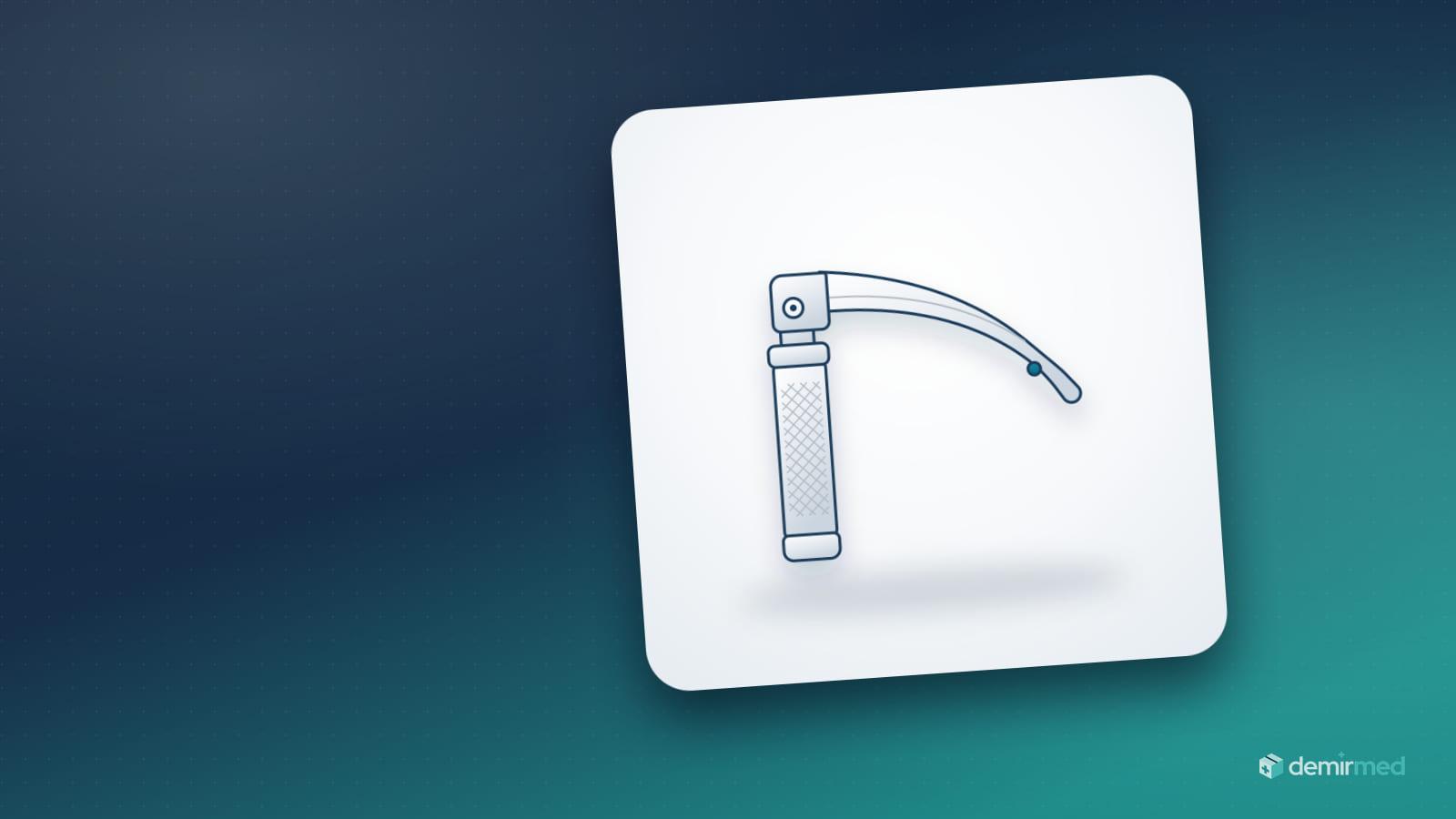
Blade types
Macintosh, Miller and the fibre-optic green system
What is laryngoscopy? Direct and video laryngoscopy
Laryngoscopy is the visualisation of the larynx and vocal cords, and the term is used in two settings:
- Laryngoscopy for intubation (anaesthesia, emergency, intensive care): visualising the glottis so that an endotracheal tube can be passed through the vocal cords. In direct laryngoscopy the glottis is seen directly by eye; the view depends on aligning the oral, pharyngeal and laryngeal axes with head and neck positioning. In video (indirect) laryngoscopy the image comes from the camera at the blade tip to a screen.
- Diagnostic laryngoscopy (ear, nose and throat): examination of the larynx for hoarseness, swallowing difficulty or a suspected mass. Indirect mirror laryngoscopy, examination with a flexible fibre-optic or video endoscope passed through the nose and videolaryngostroboscopy are done in the outpatient clinic; when biopsy or surgery is needed, direct (micro)laryngoscopy is performed under general anaesthesia.
On purchase lists, “fibre-optic laryngoscope” usually describes a rigid intubating laryngoscope with fibre-optic illumination; in ENT practice it means a flexible fibre-optic endoscope used to examine the larynx through the nose. State clearly in your purchase request which device you need. For ENT examination devices, see our otoscope, ophthalmoscope and negatoscope guide.
| Criterion | Direct laryngoscopy | Video laryngoscopy |
|---|---|---|
| Line of view | Directly by eye, along the mouth-pharynx-larynx line | On a screen via the camera at the blade tip |
| Quality of view | Depends on anatomy and positioning | Often a better glottic view with limited mouth opening or neck movement |
| Team and teaching | Only the operator sees the view | The team watches the same image; teaching and supervision are easier |
| Tube passage | Line of sight and tube path coincide | With a hyperangulated blade, seeing the glottis does not guarantee tube passage |
| Limitations | View can be limited in a difficult airway | Blood, secretions or fogging can obscure the camera; needs charging |
| Role | Basic and back-up device on every trolley | First choice or additional device depending on resources |
Current difficult-airway guidelines emphasise that a video laryngoscope should be available and that the team should be trained to use it. A direct laryngoscope with no electronics is always kept ready as a back-up for device failure or bleeding that obscures the camera.
Endotracheal tube sizes and parts
The size of an endotracheal tube (ETT) is its internal diameter (ID) in millimetres: a size 7.5 tube has an internal diameter of 7.5 mm. The outer diameter (OD) is also printed on the tube. The clinician chooses the tube according to the patient's age, sex and airway anatomy.
Parts of an endotracheal tube
- 15 mm connector: the standard fitting for the ventilator, anaesthesia circuit or bag-valve-mask.
- Pilot balloon and valve: the cuff is inflated with a syringe through this valve; the pilot balloon shows that the cuff is inflated but does not measure pressure reliably.
- Cuff: the balloon near the distal end; a high-volume, low-pressure cuff seals the trachea and reduces leak and aspiration risk.
- Murphy eye: a side hole near the tip that provides an alternative path for gas if the bevelled tip is blocked.
- Radiopaque line: visible on X-ray, so the position of the tube tip can be assessed on a chest radiograph.
- Depth markings: centimetre marks from the tip; the value at the lips is recorded.
Endotracheal tube size table
| Patient group | Typical internal diameter (ID, mm) | Note |
|---|---|---|
| Preterm, <1 kg (<28 weeks) | 2.5 | Typical value in neonatal resuscitation tables |
| Neonate, 1–2 kg (28–34 weeks) | 3.0 | |
| Neonate, >2 kg (>34 weeks) | 3.0–3.5 | The smaller size is usually chosen for a cuffed tube |
| 1–12 months | Cuffed 3.0–3.5; uncuffed 3.5–4.0 | |
| 1–2 years | Cuffed 3.5–4.0; uncuffed 4.0–4.5 | |
| Child over 2 years | Cuffed ≈ (age / 4) + 3.5; uncuffed ≈ (age / 4) + 4 | Example, 6 years: cuffed 5.0, uncuffed 5.5 |
| Adult female | 7.0–7.5 | |
| Adult male | 7.5–8.0 (up to 8.5) |
The formulas are starting estimates; tubes half a size smaller and larger than the calculated one are kept ready. Cuffed tubes are now common in children as well.
Tube depth and cuff pressure
- Adult: for oral intubation, approximately 21 cm (women) and 23 cm (men) at the lips, or approximately 3 × ID in cm.
- Child over 2 years: approximately (age / 2) + 12 cm or 3 × ID for oral depth.
- Confirmation: tube position is confirmed by clinical signs, waveform capnography and, where needed, a chest X-ray according to local protocol; capnography is regarded as the gold standard for this purpose.
- Cuff pressure: commonly kept around 20–30 cmH2O and measured with a cuff manometer. High pressure can cause ischaemia of the tracheal mucosa, low pressure leak and aspiration; nitrous oxide can diffuse into the cuff and raise the pressure, so it is checked periodically during anaesthesia.
Cuffed endotracheal tubes on the market are sterile and single-use; adult units most often stock internal diameters of 6.5 / 7.0 / 7.5 / 8.0 mm, and the tubes come in a sterile single pack with internal diameter and depth markings. Paediatric sizes, reinforced tubes and tubes with a subglottic suction channel are also available.
Intubation stylet (guide) and bougie
The intubation stylet (guide) is a malleable rod placed inside the tube to give it the desired curve. The key rule: the stylet tip must not protrude beyond the distal end of the tube and must stay inside it; a protruding tip risks mucosal trauma. The stylet is withdrawn once the tube is placed. Single-use stylets are sterile and malleable; each is made for a particular range of tube internal diameters, and the size match is confirmed at purchase. A bougie, by contrast, is a long, flexible introducer advanced into the trachea first, over which the tube is railroaded; it is found in difficult-airway kits.
Laryngeal mask airway (LMA) sizes
The laryngeal mask airway (LMA) is a supraglottic airway device inserted through the mouth; its inflatable cuff surrounds the laryngeal inlet and provides an airway without entering the trachea, and no laryngoscope is needed. It is used in elective anaesthesia in suitable patients, as a rescue device after failed intubation and in resuscitation. Because it does not fully seal the trachea, it does not protect against aspiration as well as an endotracheal tube; it is limited with a full stomach, high airway pressure requirements and restricted mouth opening. Second-generation supraglottic devices have a gastric drain channel.
| LMA size | Approximate patient weight | Typical group |
|---|---|---|
| 1 | <5 kg | Neonate and small infant |
| 1.5 | 5–10 kg | Infant |
| 2 | 10–20 kg | Small child |
| 2.5 | 20–30 kg | Child |
| 3 | 30–50 kg | Older child, small adult |
| 4 | 50–70 kg | Average adult |
| 5 | 70–100 kg | Large adult |
| 6 | >100 kg | Very large adult |
Weight ranges can vary by manufacturer; the range printed on the pack is what counts. The cuff is inflated with a Luer syringe attached to the pilot balloon valve. The maximum cuff volume for each size is printed on the pack and in the instructions for use; do not exceed the value the manufacturer states.
Single-use laryngeal masks are sterile, individually packed and fitted with a 15 mm standard connector; adult units most often stock sizes 3, 4 and 5, and the size and weight range are printed on the pack.
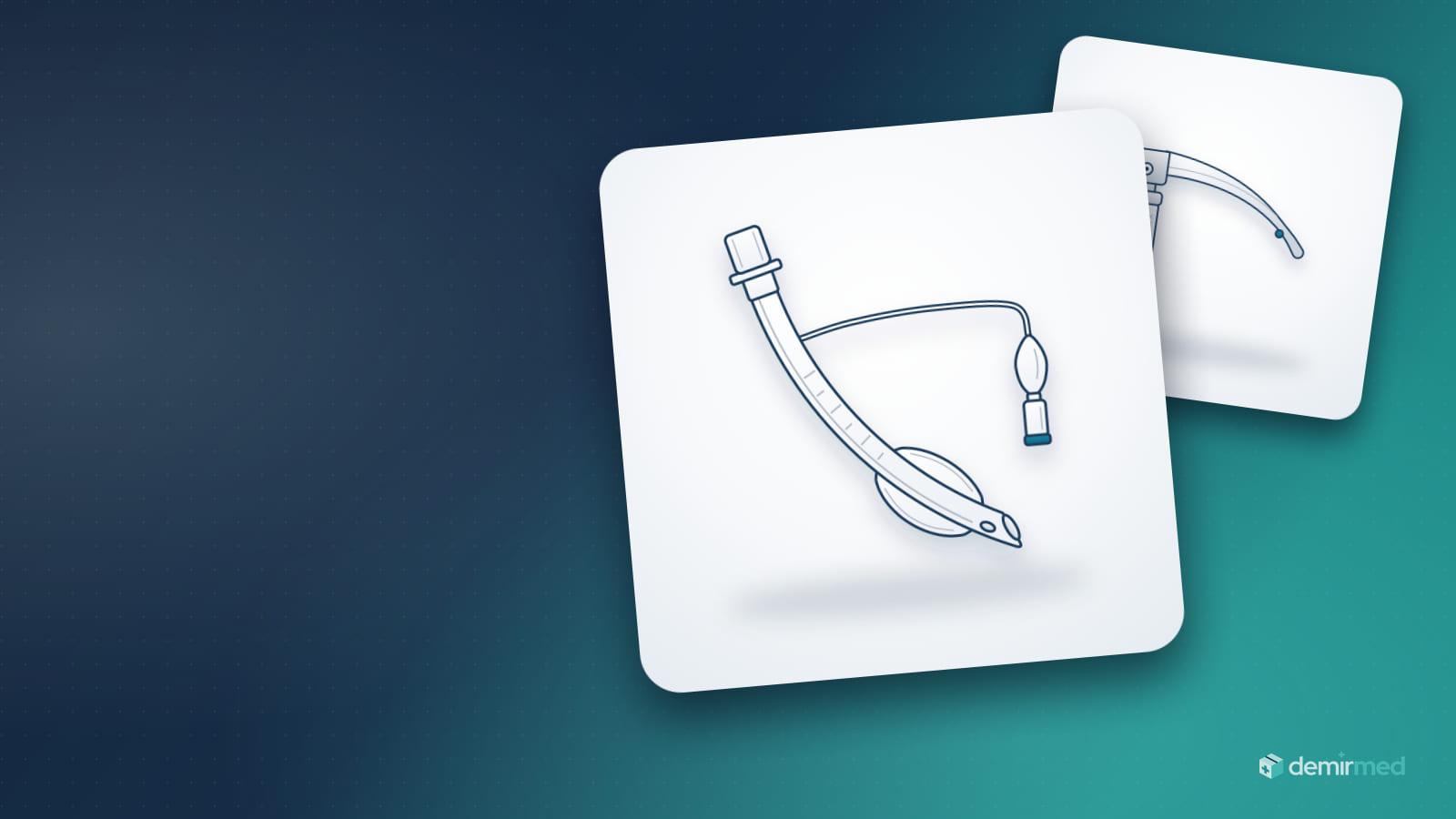
ETT sizing
Endotracheal tube size: internal diameter (ID, mm)
Laryngoscope care, daily checks and common errors
Cleaning, disinfecting and sterilising blades
Under the Spaulding classification a laryngoscope blade is a semi-critical item because it contacts mucous membranes, and it requires at least high-level disinfection; where the manufacturer allows it, many institutions prefer sterilisation. Method and cycle limits follow the manufacturer's instructions for use (IFU). A typical sequence:
- Detach the blade from the handle immediately after use and carry it in a closed, labelled container.
- Remove soil and secretions with an enzymatic detergent before they dry.
- On conventional blades remove the bulb if the IFU requires it; on fibre-optic blades avoid abrasives that can scratch the light window.
- Rinse and apply high-level disinfection or sterilisation according to the IFU.
- Dry thoroughly, test the light, store the blade in a closed pack or lidded box and record the processing date.
The handle does not touch mucous membranes, but because it is held with contaminated gloves it is cleaned after every use and wiped with a low- or intermediate-level disinfectant according to protocol. A handle containing batteries is never immersed and is not autoclaved unless the manufacturer allows it. Single-use blades are an infection-control option that reduces cross-contamination risk and reprocessing workload; confirm compatibility with your handles (green marking) before buying. For packaging and storage principles, see our sterile medical supplies guide.
Daily checks
The trolley laryngoscope is checked every shift, or as often as protocol requires, even if unused: each blade is attached and the light confirmed bright, white and steady; bulb tightness or light-window cleanliness, spare batteries and bulb, sterile pack integrity and expiry dates are checked, and the form is signed.
Common errors and how to fix them
| Problem | Likely cause | Fix and prevention |
|---|---|---|
| Light dim or yellowish | Weak batteries, loose bulb, dirty or broken fibres, wrong-voltage bulb | Replace batteries, tighten the bulb, clean the light window, match voltage |
| No light at all | Conventional blade on a fibre-optic handle (or vice versa), oxidised contact, blown bulb | Do not mix systems, check the green marking, clean the contacts |
| Wrong blade size | Only one size (for example Mac 3) on the trolley | At least Mac 3 and 4 for adults; smaller sizes in paediatric units |
| Leaked batteries, corroded compartment | Batteries left in a handle stored for a long time | Remove batteries from spare handles in storage; renew batteries in the active handle regularly |
| No spare bulb | Bulb used and not replaced | At least one spare bulb and one set of batteries per handle |
| No cuff syringe | Used syringe not replaced | Keep a 10 ml syringe permanently in the ETT and LMA drawer |
Intubation trolley checklist: what belongs in an airway kit?
The list below is a typical airway trolley for emergency departments, operating theatres, intensive care units, ambulances and clinics that use sedation; quantities are adapted to local protocol.
| Item | Recommended content | Note |
|---|---|---|
| Laryngoscope handle and blades | At least 2 handles; Mac 3 and 4 for adults, Mac 1–2 and Miller 0–1 in paediatric units | Daily light test |
| Spare batteries and bulb | At least 1 set of batteries and 1 bulb per handle | Voltage and system compatibility |
| Endotracheal tubes | Expected size plus half a size smaller and larger (e.g. 7.0 / 7.5 / 8.0 mm) | Cuffed, sterile, single-use |
| Intubation stylet | At least 2, matched to tube sizes; bougie for difficult airway | Sterile, single-use; tip must not protrude from the tube |
| Cuff syringe | At least 2 × 10 ml syringes | 10 cc syringe, Luer tip |
| Cuff manometer | 1 | Cuff pressure around 20–30 cmH2O |
| Lubricant | Water-based, single-use | Petroleum-based products can damage cuff material |
| Suction | Working suction unit, rigid (Yankauer) sucker, suction catheters | Vacuum test every shift |
| Bag-valve-mask | Adult and, if needed, paediatric; face masks in suitable sizes and reservoir | Oropharyngeal (Guedel) airways in several sizes |
| Oxygen source and mask | Filled oxygen cylinder, flowmeter, oxygen mask, nasal cannula | Cylinder contents checked every shift |
| Laryngeal mask | Sizes 3, 4 and 5 for adults | Rescue airway; sterile, single-use |
| Tube fixation | Tube holder or tape | Record the depth marking |
| Monitoring | Pulse oximeter; waveform capnography where available | Alarm limits set to the patient's target range |
| Personal protective equipment | Gloves, eye and face protection | Examination gloves |
Stock, packaging and storage notes:
- Sterility: endotracheal tubes, laryngeal masks and stylets stay in their sterile single packs; opened, wet or damaged items are not used.
- Single use and disposal: single-use items are never reprocessed; used tubes, masks, stylets and single-use blades are discarded as medical waste.
- Storage: dry, cool and out of direct sunlight; tubes are stored flat so they do not kink.
- Traceability and restocking: record lot numbers and expiry dates and apply first-in, first-out; after use the trolley is restocked the same day and resealed. For consumption and reorder planning, see our clinic stock management guide.
For interpreting SpO2 values, see our guide what is a pulse oximeter and what should oxygen saturation be.
Product availability
Demir Med does not carry laryngoscopes, endotracheal tubes, intubation stylets, laryngeal masks, oxygen cylinders, oxygen masks, nasal cannulas or pulse oximeters in its catalogue; this guide is for information on choosing and maintaining airway equipment. The 10 cc syringe used as a cuff syringe and examination gloves for personal protection are in our catalogue. For a clinic set-up list, see the Medical Equipment and Medical Consumables categories, and send specific needs for catalogue products through a quote request. For theatre stock, our guide to surgical instrument names and uses also helps.

Checklist
Airway trolley: LMA, oxygen and spares
Sources and standards
- ISO 7376: Laryngoscopes for tracheal intubation (hook-on fitting and fibre-optic illumination compatibility)
- ISO 5361: Tracheal tubes and connectors
- ISO 5356-1: Conical connectors (15 mm and 22 mm)
- ISO 11712: Supralaryngeal airways and connectors
- CDC, Guideline for Disinfection and Sterilization in Healthcare Facilities (2008) and the Spaulding classification
- Difficult Airway Society (DAS), guidelines for the management of unanticipated difficult tracheal intubation in adults
- American Society of Anesthesiologists (ASA), Practice Guidelines for Management of the Difficult Airway (2022)
- European Resuscitation Council (ERC) and American Heart Association (AHA) paediatric and neonatal resuscitation guidelines (current editions)
- Manufacturers' instructions for use (IFU)